

You’re Not Lost — You’re Over-Contained | Functional Freeze Explained
You’re Not Lost — You’re Over-Contained

Why High-Functioning People Feel Stuck (and What Actually Helps)
If you’re reading this, chances are you’re not failing at life.
You’re capable. Responsible. Intelligent.
You show up. You deliver. People rely on you.
And yet — something feels… stuck.
Not dramatic. Not chaotic.
Just a quiet sense of inner pause. A loss of clarity. A dull pressure behind the eyes or chest. Decisions take longer. Motivation feels strangely unavailable.
If that resonates, let’s name this gently:
You’re not lost.
You’re over-contained.
And there’s a very real reason for it.
A Quick Pause (Before We Go Further)
Before understanding anything, notice your body.
Unclench your jaw.
Let your shoulders drop.
Take one slow inhale through the nose… and a longer exhale.
If even that feels relieving, your nervous system is already speaking.
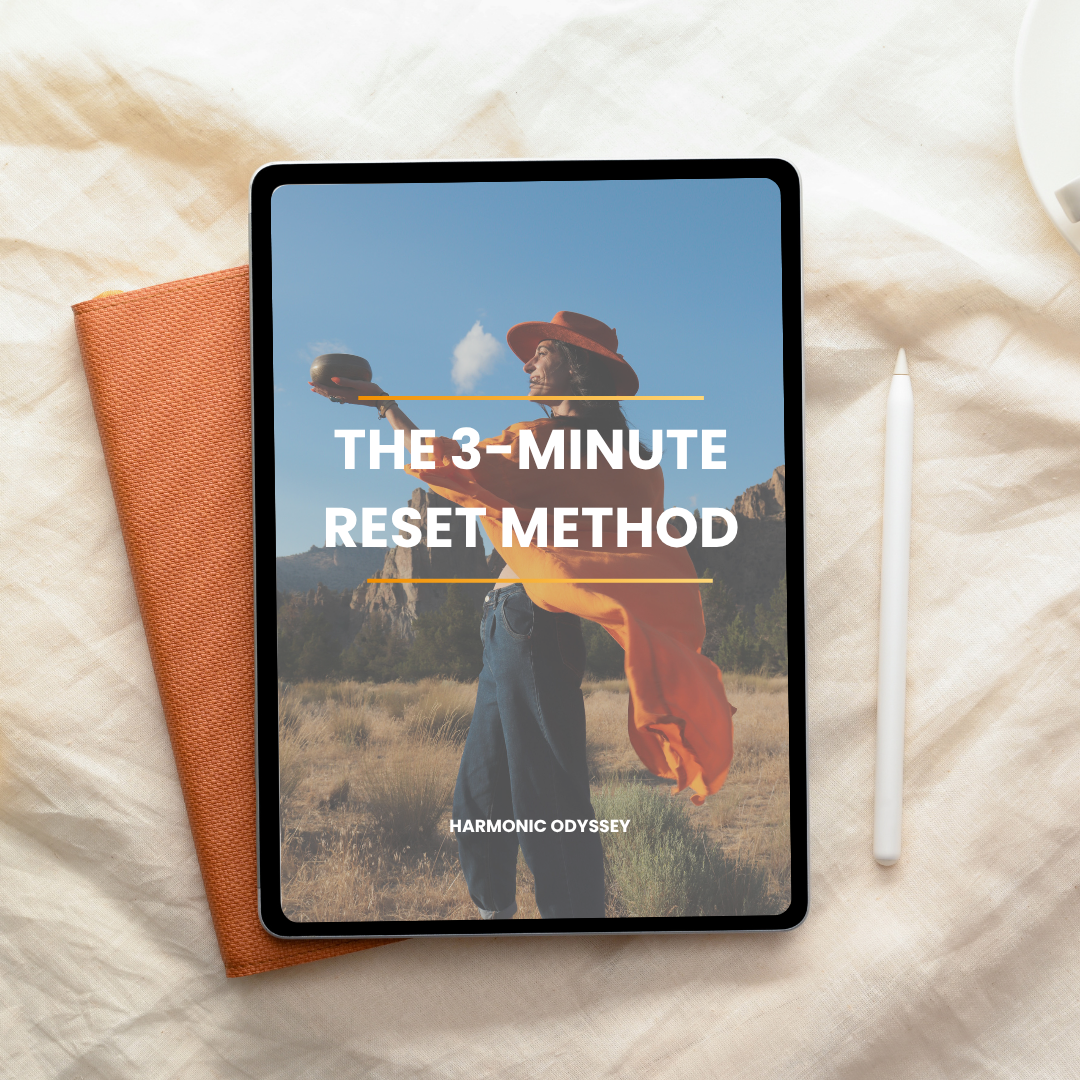
→ Try the free 3-Minute Reset— a short sound-based practice designed to reduce nervous system overload without effort:
https://amandinelrh.com/blog/b/3-minute-stress-relief-techniques
What You’re Experiencing Has a Name: Functional Freeze
Many high-capacity people live in a nervous system state called functional freeze.
It’s different from burnout.
Different from depression.
Different from “laziness” or lack of discipline.
In functional freeze, you continue to function outwardly — sometimes at a very high level — while your inner movement slows or shuts down.
Your mind stays active.
Your body stays braced.
But your inner guidance goes quiet.
This isn’t weakness.
It’s biology.
Your nervous system is doing exactly what it was designed to do when it has carried too much for too long.
Fight, Flight… and the One We Don’t Talk About
Most people know about fight or flight.
But there’s a third stress response that’s far more common in high-functioning adults: freeze.
Freeze doesn’t always look like collapse.
Sometimes it looks like:
competence without joy
productivity without direction
success without satisfaction
When stress, responsibility, emotional restraint, or constant adaptation last too long, the nervous system chooses containment.
Not because it’s broken — but because it’s trying to stay safe.
This is why so many capable people feel confused by their own experience.
On the outside, life continues. You perform. You show up. You handle what needs to be handled.
On the inside, something feels paused.
This is not a contradiction.
It is the nervous system choosing containment over collapse.
The Biology Behind Feeling Stuck but Capable
What’s happening here is often described as nervous system dysregulation.
When the nervous system remains under chronic load, it prioritizes survival over clarity, creativity, and emotional range. Attention narrows. Decision-making slows. Emotional expression becomes muted — a pattern often described as emotional shutdown.
This response is well documented in stress physiology research:
McEwen, Protective and Damaging Effects of Stress Mediators
https://www.ncbi.nlm.nih.gov/pmc/articles/PMC4240648/Sapolsky, Stress and the Brain
https://www.ncbi.nlm.nih.gov/pmc/articles/PMC5579396/
Understanding this matters, because it reframes the experience.
Feeling stuck is not a personal flaw.
It is your nervous system asking for support.
Why High Capacity Leads to Over-Containment
Highly capable people are especially prone to functional freeze.
When you are used to handling everything efficiently, your nervous system rarely gets a true break. Continuous adaptation, over-functioning, and responsibility keep stress circulating internally.
Instead of releasing, the system contains.
Over time, this can lead to mental exhaustion burnout — even when life looks successful from the outside.
The Emotional and Cognitive Costs of Staying Contained
When functional freeze persists, the effects are subtle.
Life continues — but feels dulled.
Emotions feel distant. Joy feels flat. Frustration does not move. Even relief is brief. This is not a lack of feeling; it is the nervous system limiting input to stay safe.
Mentally, thinking feels heavier. You may reread the same sentence. Simple decisions feel oddly taxing.
Your brain is not failing.
It is conserving energy.
These signals are reversible — but only when addressed at the level of the nervous system, not willpower.
Why Awareness Changes Everything
You cannot think your way out of nervous system overload.
When the body is braced, thinking is downstream.
What helps is body-based awareness — noticing breath, sensation, posture, and tension without trying to fix them.
This kind of awareness sends signals of safety to the nervous system and gently interrupts the stress loop.
Research from Harvard shows that simple body-based practices can significantly reduce stress markers like cortisol:
https://www.health.harvard.edu/mind-and-mood/a-20-minute-nature-break-relieves-stress
Change often begins in the body before it becomes mental or emotional.
A Practical Place to Start (Without Overwhelm)
Most people don’t need more insight.
They need their nervous system to experience a small moment of release.
This is why short practices work better than long ones when you’re over-contained.
If you want to feel what regulation actually feels like — without effort or analysis — start here:

A short sound-based practice designed to ease functional freeze and restore clarity gently:
When Self-Practice Isn’t Enough
Sometimes short practices help — but the system has been holding too much for too long.
Signs additional support may help include:
feeling stuck for months despite effort
persistent nervous system overload
sleep disruption or chronic tension
ongoing mental exhaustion
This doesn’t mean something is wrong.
It means your nervous system may benefit from guided regulation.
Our workshops and talks are built around this exact principle — regulation first, clarity second:
https://amandinelrh.com/speaking
Closing
If you feel capable but stuck, nothing is broken.
Functional freeze is not failure.
It is protection.
When the nervous system has carried too much for too long, it limits movement to stay safe. Clarity returns not through pressure, but through regulation.
Start small.
Start gently.
And when you’re ready, begin with the 3-Minute Reset:
https://amandinelrh.com/blog/b/3-minute-stress-relief-techniques
Frequently Asked Questions
Is functional freeze the same as burnout?
Not exactly. Burnout is often associated with exhaustion and depletion. Functional freeze describes a state where you may still be functioning outwardly, but your nervous system is holding too much internally. Many people experience functional freeze before burnout becomes obvious.
Why do high-functioning people experience this more often?
Because capable people adapt instead of collapsing. Over time, responsibility, emotional restraint, and constant adaptation lead the nervous system to choose containment as a form of protection.
Is this a mindset issue or a motivation problem?
No. Functional freeze is not caused by a lack of discipline or positive thinking. It’s a physiological response related to nervous system overload and dysregulation. Mindset work alone rarely resolves it.
How do I know if this is happening to me?
Common signs include feeling capable but internally stuck, slower decision-making, emotional flattening, chronic tension, or mental exhaustion despite “doing everything right.”
What’s the safest way to start shifting this?
Start with short, body-based practices that help the nervous system feel safe — not forced. Small moments of regulation are often more effective than long or intense practices.
If you’d like a simple place to begin, the free 3-Minute Reset was created for exactly this state:







Navigation
© 2026 Harmonic Odyssey by Amandine LRH - A Greener Life LLC, All Rights Reserved.