
Nervous System Regulation Through Sound
Your Jaw Is Clenched Right Now
And Your Nervous System Has Been Running on Survival Mode for Months
Your Nervous System Has Been Running on Survival Mode for too long.
IT ENDS NOW
You don't need another meditation app or breathing technique.
You need a Frequency Shifter — someone who can dissolve the energetic static keeping your body locked in threat response, and guide you back to the safety your nervous system has been craving.
Join 17,000+ people who've found their way back to regulation
Join 17,000+ people who've found their way back to regulation
Find Your Entry Point
Whether you're exploring for the first time or ready for deep transformation, there's a path designed for your biology.
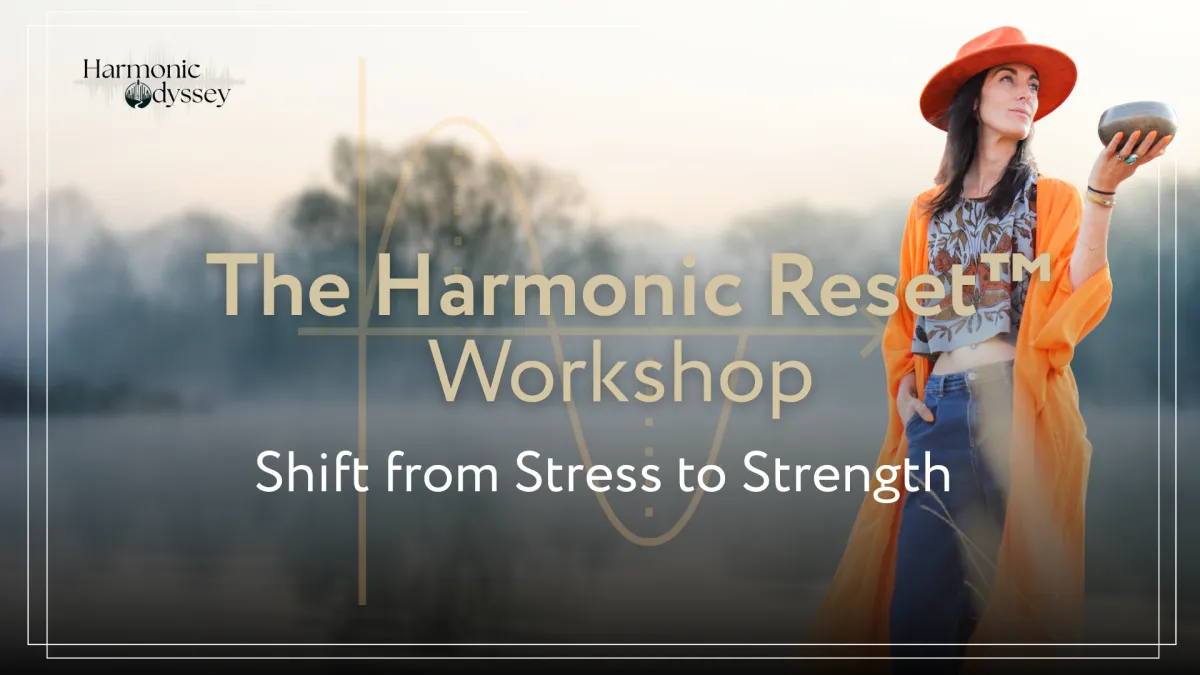
Sound Reset Workshop
35-Minute Live ExperienceExperience how sound frequencies shift your nervous system from survival mode to safety—without meditation or effort.
Join Free WorkshopUpcoming Events
Sound Baths • RetreatsJoin in-person experiences where sound becomes ceremony. Find our next gathering in Central Oregon.
See Upcoming EventsDeep Sleep Reset
Deep Sound Wave + GuidanceShift out of survival mode and into restorative rest. Targeted frequency entrainment designed to quiet the mind and regulate your nervous system for deep, unbroken sleep.
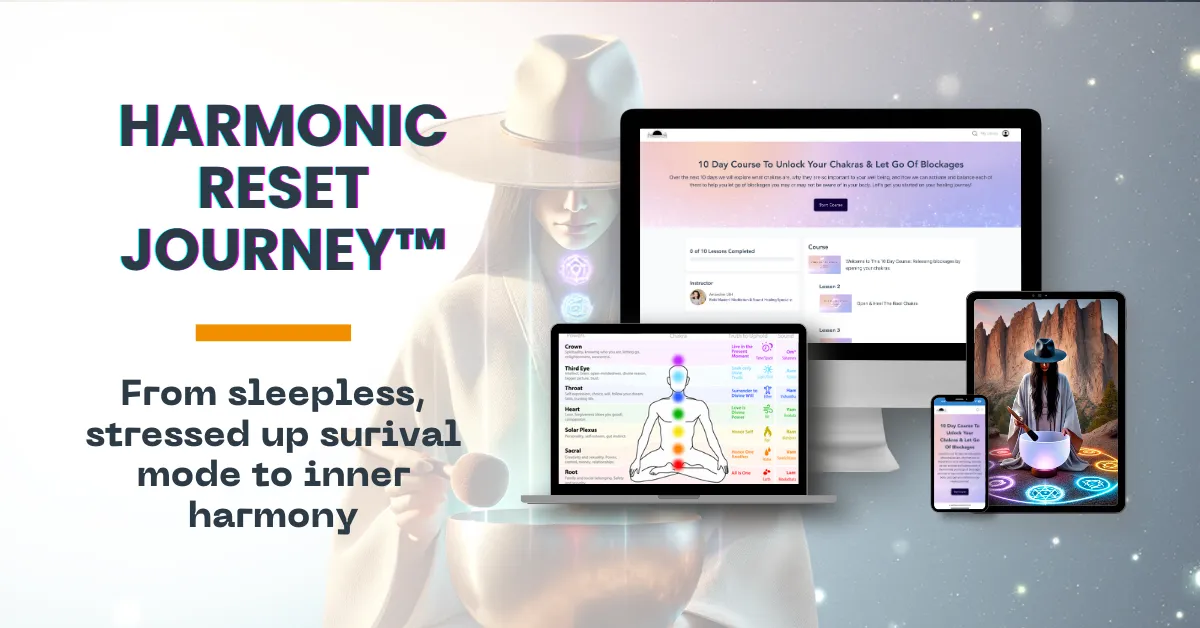
Get The ResetHarmonic Reset Journey
Exit survival mode and reclaim your capacity for rest and clarity in 10 days using precision frequencies.
Begin Reset — $197The Regulated Shift
A 4-week guided container to rebuild your life from a regulated foundation. Starts May 14th.
Learn More — $997You can’t discover new land by staring at the map.
When the body settles, attention naturally shifts —
away from analysis,
and toward what’s already true.
This is where the internal noise thins out.
Where intuition isn’t something you access,
it’s something you recognize.
Not silence.
The absence of static
You can’t discover new land by staring at the map.
When the body settles, attention naturally shifts —
away from analysis,
and toward what’s already true.
This is where the internal noise thins out.
Where intuition isn’t something you access,
it’s something you recognize.
Not silence.
The absence of static
Why Sound?
Your nervous system doesn't speak words. It speaks frequency.
Why Sound?
Your nervous system doesn't speak words. It speaks frequency.
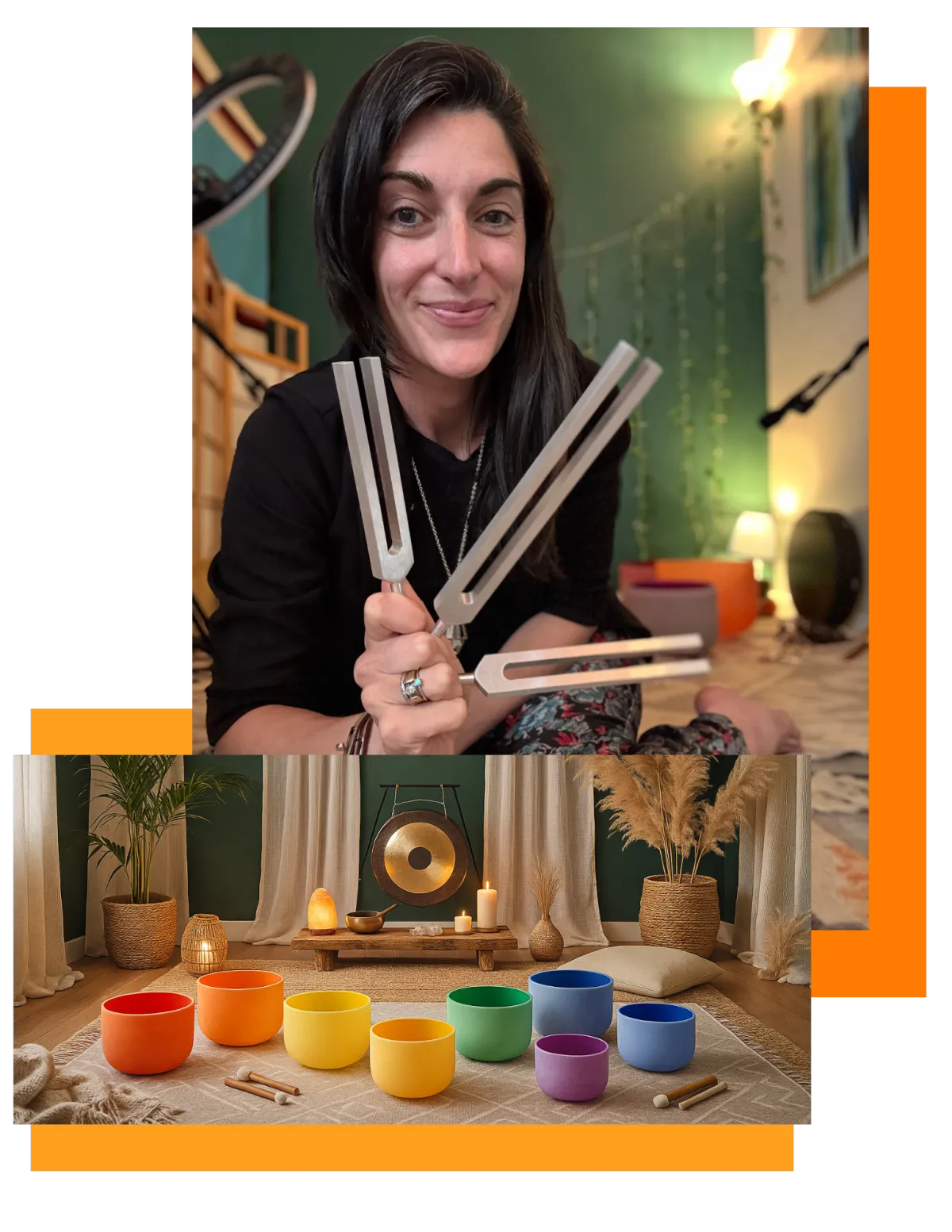
Sound works because it speaks directly to the nervous system — bypassing the mind and meeting the body first.
Specific frequencies, rhythms, and vibrations help the body recognize safety, slow the stress response, and re-establish internal coherence.
This isn’t about forcing calm.
It’s about giving the body the signal it’s been missing.
It can feel like magic. It works like biology.
Sound works because it speaks directly to the nervous system — bypassing the mind and meeting the body first.
Specific frequencies, rhythms, and vibrations help the body recognize safety, slow the stress response, and re-establish internal coherence.
This isn’t about forcing calm.
It’s about giving the body the signal it’s been missing.
It can feel like magic. It works like biology.
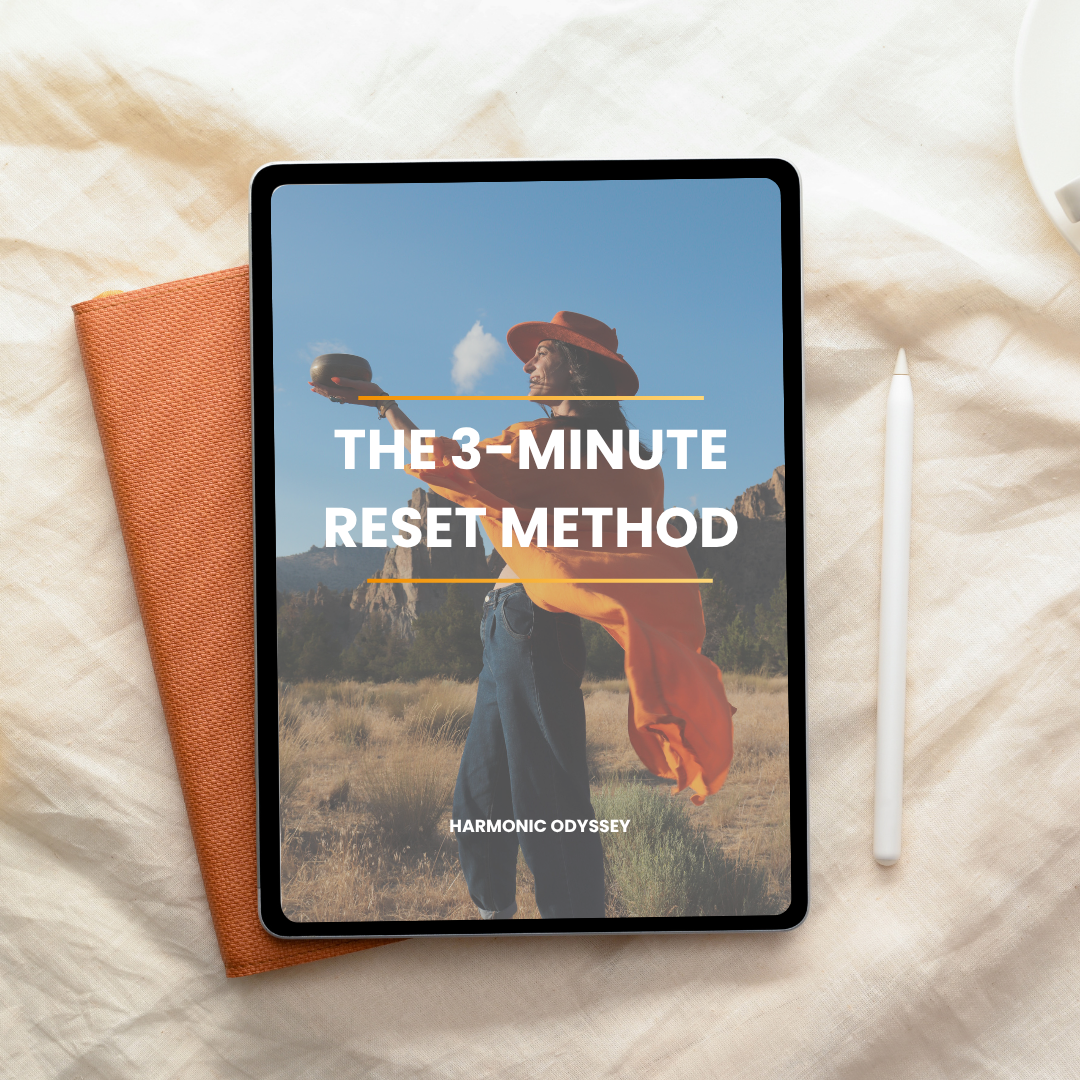
Start with the 3-Minute Clarity Reset.
Stop the spiral. Clear the static. In under 180 seconds.
Most people try to think their way out of stress.
It rarely works.
The 3-Minute Reset is a short, embodied regulation protocol —
using breath, gentle humming, and focused presence —
to help the nervous system settle quickly so clarity can return.
You use it:
- before a meeting
- before a difficult conversation
- when urgency takes over
- or when you feel disconnected from your body
You don’t need silence.
You don’t need an hour.
You don’t need to “figure anything out.”
You just follow the sequence.
Free • Instant access • Use anytime
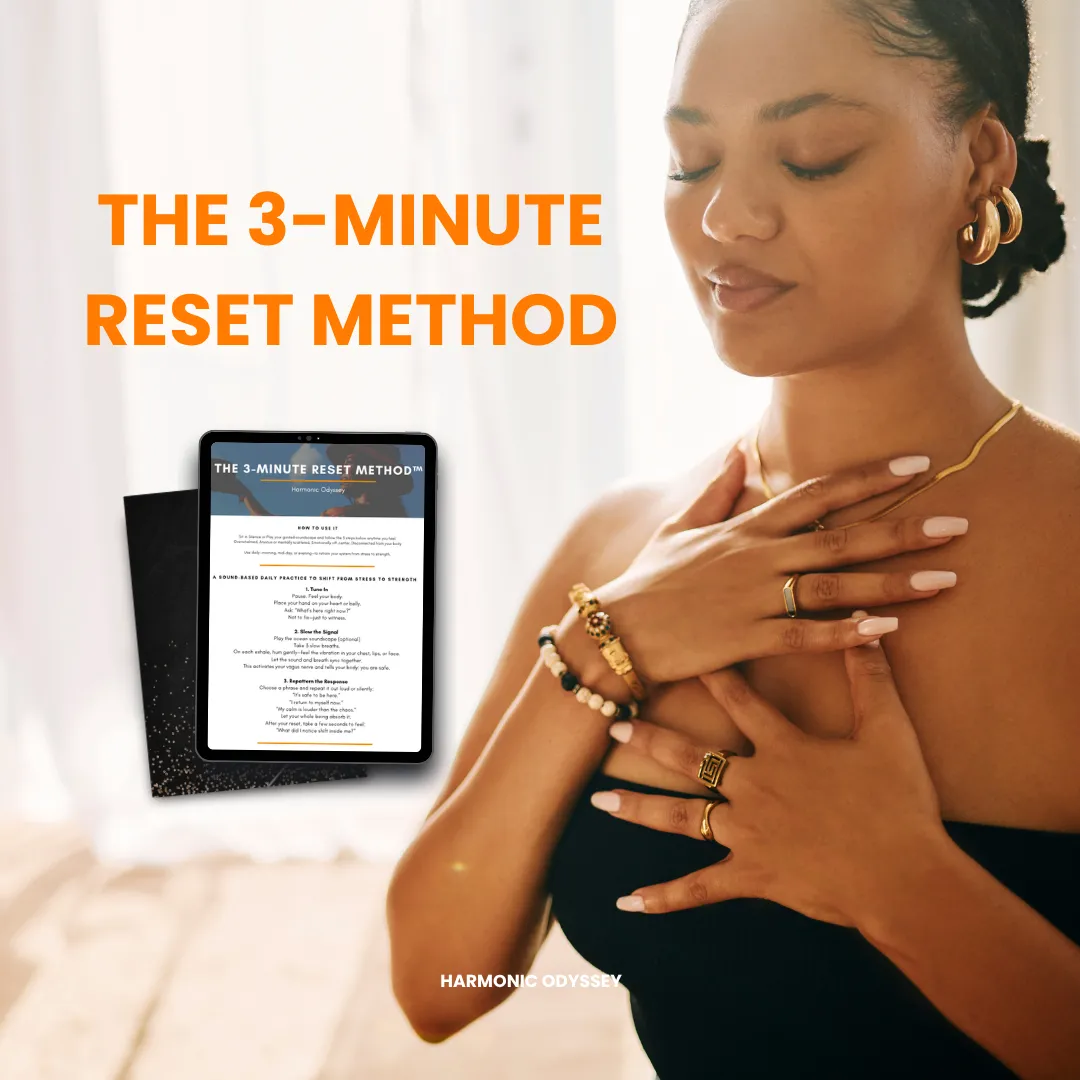
What you’ll receive:
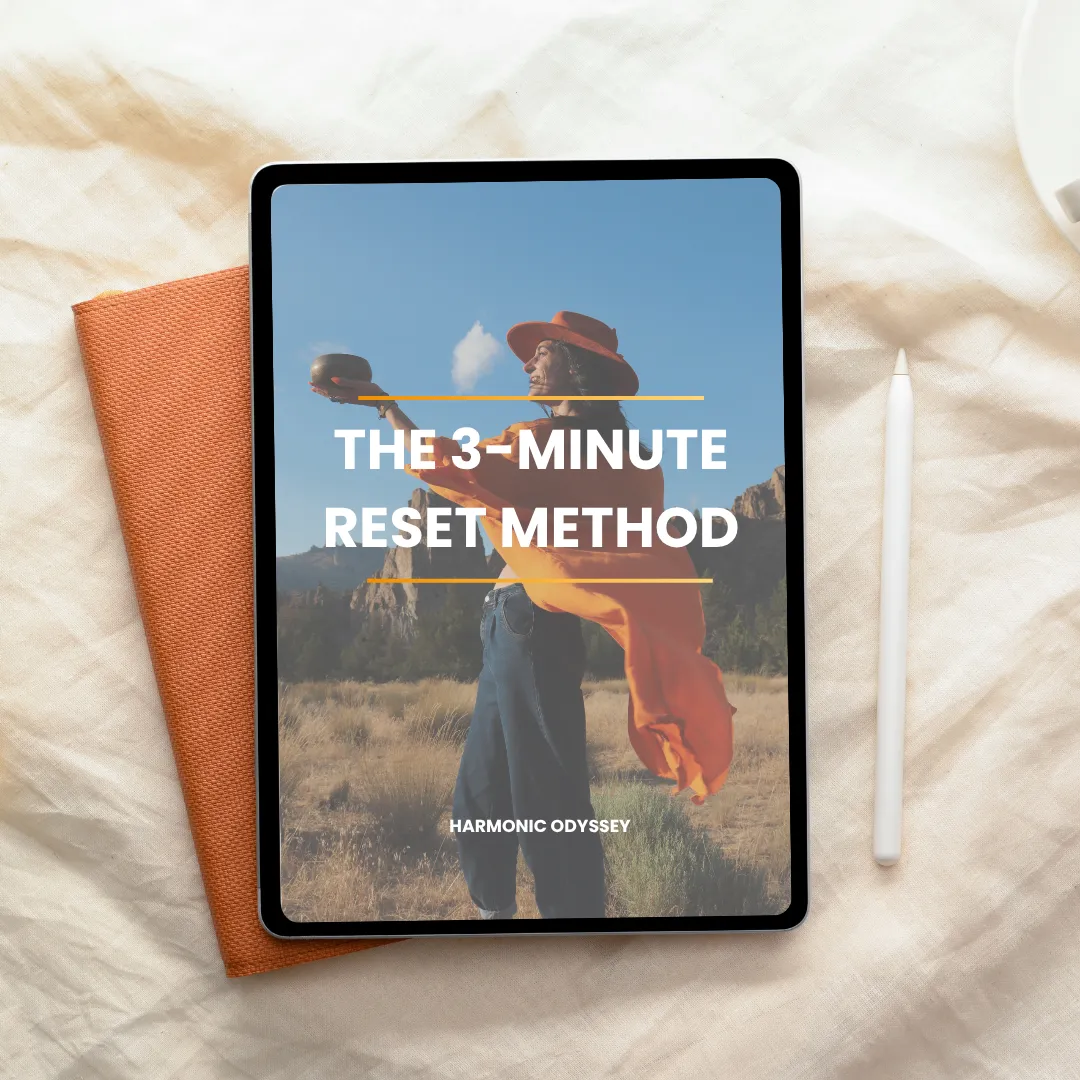
A short, simple and powerful PDF guide
A simple practice you can return to anytime you feel overwhelmed
A simple, science-backed practice to help your body shift out of stress — without forcing calm or changing your mindset.
In just a few minutes, you may notice:
- Less internal noise
- A subtle sense of grounding
- More space between your thoughts
- A return to yourself — even briefly
This isn’t about fixing anything.
It’s about giving your nervous system the signal it needs to recalibrate.
Free • Instant access • Use anytime
Small shifts like this one are often enough to remember:
clarity doesn’t require effort — it requires the right signal.
Insight is a map. Experience is the journey.
If thinking could have fixed it, it would be fixed by now.
True clarity requires a shift in your internal architecture—a transition from "knowing" to being.
In this 30-minute Sound & Somatic Session, we stop talking about the stress and start clearing the path.
Using a sequence of meditation and frequency, we anchor you back into a state of safety that stays with you long after the sound fades.
If thinking could have fixed it, it would be fixed by now.
True clarity requires a shift in your internal architecture—a transition from "knowing" to being.
In this 30-minute Sound & Somatic Session, we stop talking about the stress and start clearing the path.
Using a sequence of meditation and frequency, we anchor you back into a state of safety that stays with you long after the sound fades.
When the body settles, problems become solvable.
True Clarity Requires Both Strategy and Serenity.
Most approaches address only half of the equation.
Traditional coaching focuses on the mind, analyzing and strategizing.
Healing modalities focus on the body—releasing and relaxing.
My method integrates Sound Healing, Somatic Regulation, and Embodied Guidance into one cohesive journey.
We don't just calm your nervous system; we use that grounded state as the foundation for the life you're actually meant to live — whether that's setting boundaries, navigating a transition, or reclaiming your energy from burnout.
This work blends nervous system regulation, sound, and real-life transition.
My background is in branding and communication — helping people clarify their message and express what they offer with precision.
Over time, sound and intuitive healing became the way I support the moments when clarity isn’t accessible through thinking alone.
Working with the body first helps clarity and direction return naturally.

Grounded, science-informed practices — guided with care and precision.
— Amandine Le Roux Hancock, founder of Harmonic Odyssey

Featured In





The Roadmap to Your Next Chapter
A BIOLOGICAL APPROACH TO CLARITY
You don’t need more pressure to 'figure it out.'
You need a sequence that works with your biology, not against it. We move from safety to connection, and finally, to strategy

Reset
Quiet the internal noise.
We start by shifting your nervous system out of 'survival mode' and into safety. Using sound frequencies, we down-regulate the stress response so your body can stop fighting and start resting.
This step is about:
Goal: Signaling safety to the body.
Result: Replacing anxiety
with physiological calm.
Tool: The 3-Minute Clarity Reset.
A short, intentional practice to help your body shift out of stress and return to a baseline of calm and clarity.
(What the 3 Minutes Reset Method helps you achieve)

Understand
Hear your own signal again.
Once the static of stress settles, we bypass the analytical mind to access your intuition. This is where you remember who you are outside of your titles, obligations, and burnout.
This step is about:
Goal: Accessing the subconscious mind.
Result: Distinguishing fear from intuition.
Tool: Deep Sound Immersion & Guided Inquiry or the Harmonic Reset Workshop
Realign
Design your new chapter.
With a regulated system and clear intuition, strategy becomes easy. We map out your next steps—whether it's a career pivot, a business launch, or a lifestyle shift—from a place of certainty.
This step supports:
Goal: Turning clarity into action.
Result: Making life decisions without urgency or doubt.
Tool: Strategic Coaching & Integration. (application only)
Join Over 10,000 People Who Have Found Their Reset.
My students come from all walks of life.
Read from their experience.

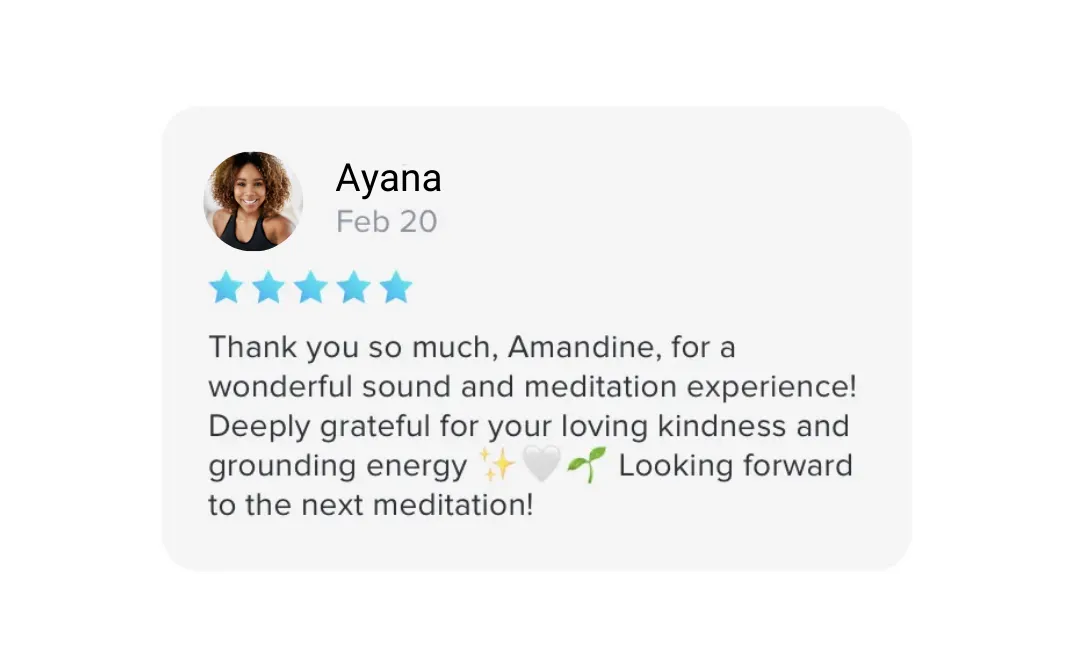


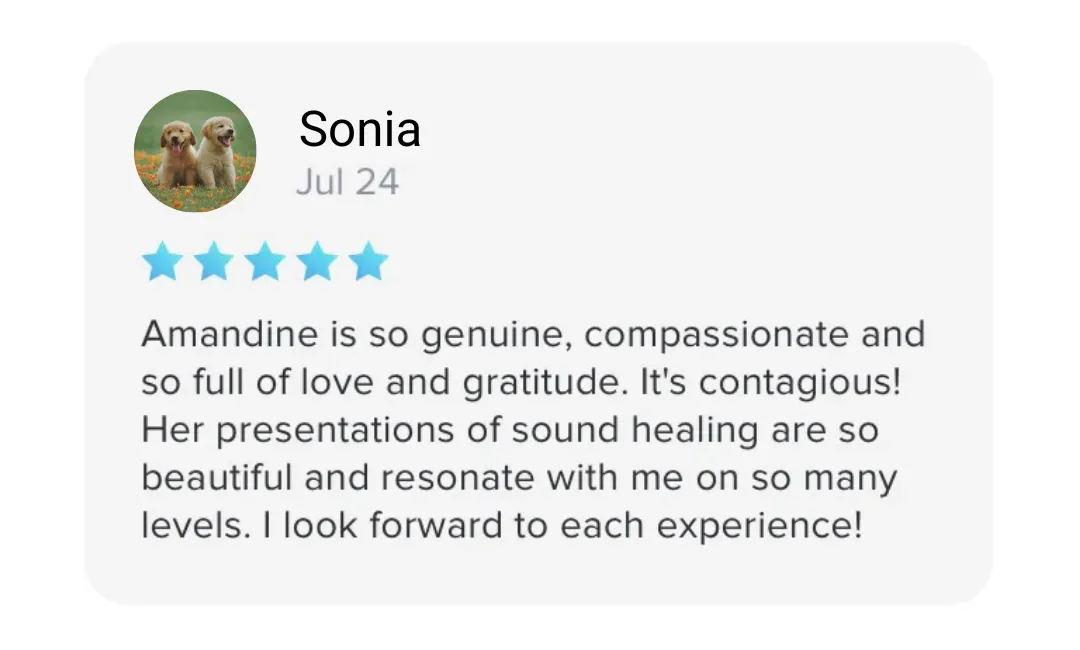

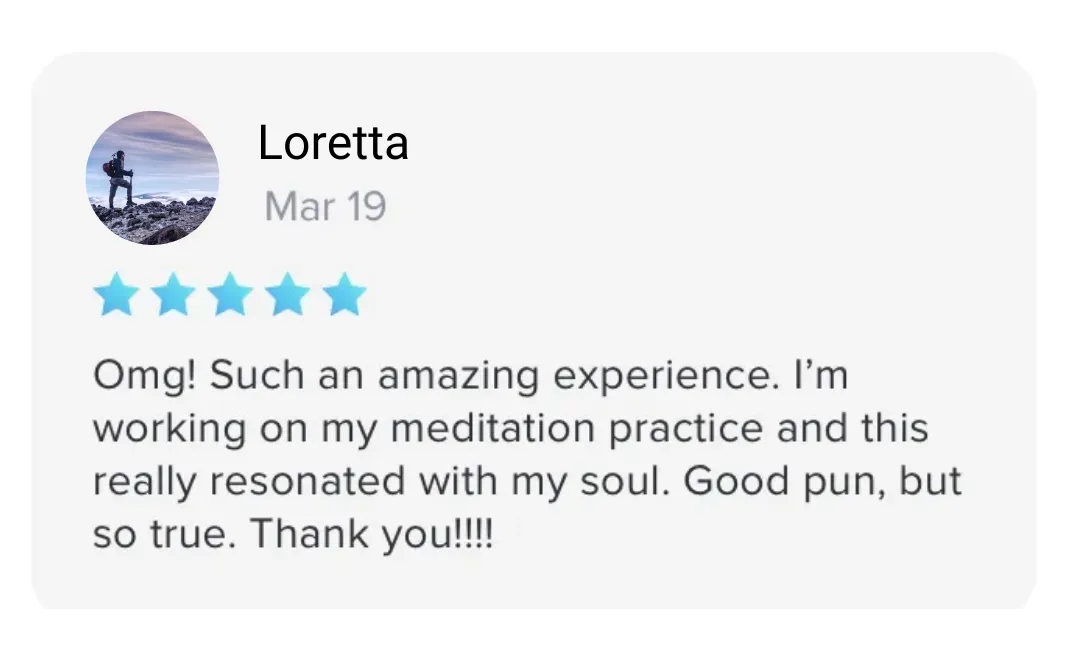

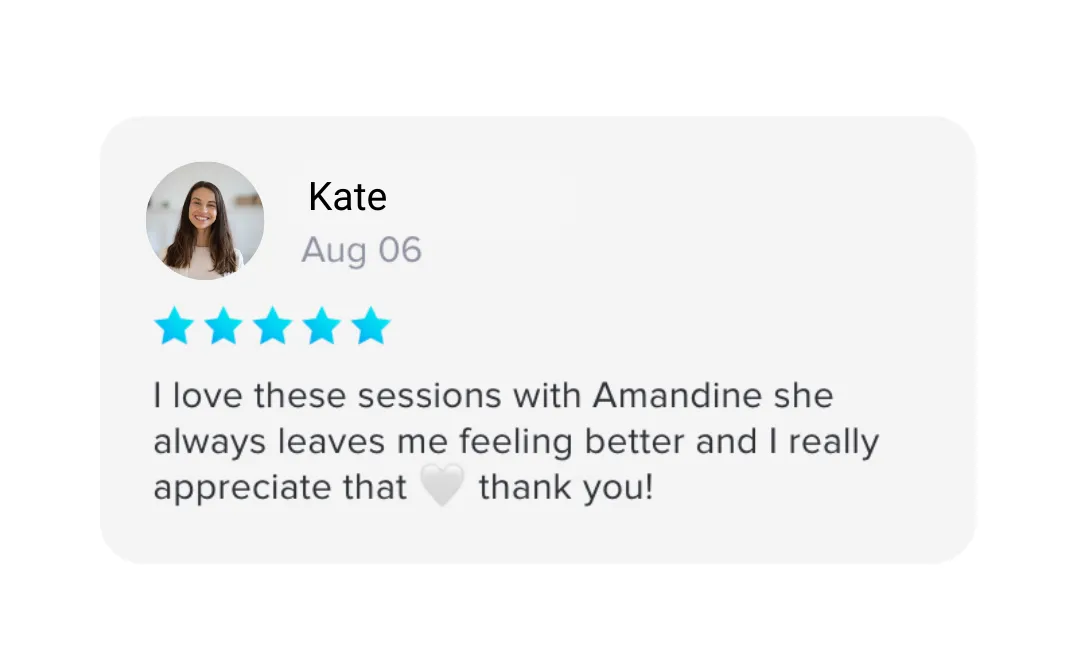
If you're navigating a deeper or longer transition — professional, personal, or internal — there are ways to work together beyond a single session. These paths are designed for those who want sustained support, clarity, and integration over time.
Questions You Might Be Asking
If you're wondering whether this is right for you, you're not alone. Here's what people ask before they start.
Yes. Most meditation apps ask you to quiet your mind through effort — focusing on breath, clearing thoughts, visualizing calm.
This works differently. Sound frequencies don't ask your mind to do anything. They bypass cognition entirely and speak directly to your nervous system, creating a physiological shift before your thinking brain even registers it.
You're not trying to relax. Your body is receiving a signal it recognizes as safety, and regulation happens as a biological response — not a mental achievement.
No. This work is grounded in nervous system science and acoustic physics, not dogma.
You don't need to believe in chakras, crystals, or energy fields for sound to work on your body. Specific frequencies influence brainwave states and vagal tone — that's measurable biology, not mysticism.
I do reference energy and resonance because they're useful frameworks, but if that language doesn't resonate with you, focus on this: your nervous system doesn't speak words. It speaks frequency. That's the foundation of everything here.
Calm music can be soothing, but it's not designed to regulate your nervous system at a biological level.
Precision sound work uses specific frequencies (432Hz, 528Hz, binaural beats) calibrated to influence brainwave patterns, slow your heart rate, and activate your vagus nerve — the main pathway between your brain and your body's stress response.
It's the difference between background noise that feels nice and a targeted intervention that changes your physiology.
Because most approaches try to fix burnout, anxiety, or overwhelm at the level of the mind — through insight, reframing, willpower, or positive thinking.
But if your nervous system is locked in survival mode, your thinking brain is offline. You can't "mindset" your way out of a dysregulated body.
This work starts with the body first. Once your nervous system feels safe, clarity, motivation, and decision-making return naturally — not because you forced them, but because the biological conditions for them are finally present.
Yes. In fact, many people find this work because traditional approaches haven't addressed the nervous system component of these experiences.
Sound-based regulation is gentle, non-verbal, and doesn't require you to "sit still and clear your mind" — which can feel impossible when your system is activated.
That said, this is not a replacement for medical or therapeutic care. It's a complementary tool that works alongside whatever support you're already receiving. If you're working with a therapist or doctor, this can enhance that work by helping your body settle enough to actually process what you're learning.
The free Sound Reset Workshop gives you an experience of what regulation feels like and introduces you to the core method. You'll leave with a felt sense of what's possible when your nervous system shifts.
The 10-Minute Serenity Challenge ($49) gives you 21 days of short daily practices — ideal if you want something simple you can return to regularly without a big time commitment.
The Harmonic Reset Journey ($197) is a 10-day deep-dive that teaches your body how to exit survival mode and stay regulated. It's structured, cumulative, and designed to create lasting change — not just temporary relief.
The Regulated Shift ($997) is a 4-week live cohort where we don't just reset your nervous system — we rebuild your life from that regulated foundation. This is for people navigating major transitions who need sustained support and integration.
Two things: nervous system science and strategic integration.
Most sound healing is presented as relaxation or spiritual practice. That's valuable, but it often stays at the surface level — you feel calm in the moment, but the patterns return.
My work bridges sound healing and somatic regulation to create lasting nervous system shifts, then uses that regulated state as the foundation for strategic life decisions — whether that's a career pivot, boundary-setting, or building something new.
I come from 18 years in branding and strategic communication. I know how to help people clarify what they're building and express it with precision. Sound is the tool that makes that clarity accessible when thinking alone can't get you there.
No. The biological effects of sound frequencies happen whether you believe in the framework or not.
I sometimes reference chakras and energy centers because they're useful maps for understanding where the body holds tension and how sound affects different areas. But you can think of them as anatomical regions with specific nerve clusters if that makes more sense to you.
What matters is this: your nervous system responds to frequency. That's physics and biology. The rest is just language.
Field Notes from the Odyssey

You’re Not Lost — You’re Over-Contained | Functional Freeze Explained
You’re Not Lost — You’re Over-Contained

Why High-Functioning People Feel Stuck (and What Actually Helps)
If you’re reading this, chances are you’re not failing at life.
You’re capable. Responsible. Intelligent.
You show up. You deliver. People rely on you.
And yet — something feels… stuck.
Not dramatic. Not chaotic.
Just a quiet sense of inner pause. A loss of clarity. A dull pressure behind the eyes or chest. Decisions take longer. Motivation feels strangely unavailable.
If that resonates, let’s name this gently:
You’re not lost.
You’re over-contained.
And there’s a very real reason for it.
A Quick Pause (Before We Go Further)
Before understanding anything, notice your body.
Unclench your jaw.
Let your shoulders drop.
Take one slow inhale through the nose… and a longer exhale.
If even that feels relieving, your nervous system is already speaking.
→ Try the free 3-Minute Reset— a short sound-based practice designed to reduce nervous system overload without effort:
https://amandinelrh.com/blog/b/3-minute-stress-relief-techniques
What You’re Experiencing Has a Name: Functional Freeze
Many high-capacity people live in a nervous system state called functional freeze.
It’s different from burnout.
Different from depression.
Different from “laziness” or lack of discipline.
In functional freeze, you continue to function outwardly — sometimes at a very high level — while your inner movement slows or shuts down.
Your mind stays active.
Your body stays braced.
But your inner guidance goes quiet.
This isn’t weakness.
It’s biology.
Your nervous system is doing exactly what it was designed to do when it has carried too much for too long.
Fight, Flight… and the One We Don’t Talk About
Most people know about fight or flight.
But there’s a third stress response that’s far more common in high-functioning adults: freeze.
Freeze doesn’t always look like collapse.
Sometimes it looks like:
competence without joy
productivity without direction
success without satisfaction
When stress, responsibility, emotional restraint, or constant adaptation last too long, the nervous system chooses containment.
Not because it’s broken — but because it’s trying to stay safe.
This is why so many capable people feel confused by their own experience.
On the outside, life continues. You perform. You show up. You handle what needs to be handled.
On the inside, something feels paused.
This is not a contradiction.
It is the nervous system choosing containment over collapse.
The Biology Behind Feeling Stuck but Capable
What’s happening here is often described as nervous system dysregulation.
When the nervous system remains under chronic load, it prioritizes survival over clarity, creativity, and emotional range. Attention narrows. Decision-making slows. Emotional expression becomes muted — a pattern often described as emotional shutdown.
This response is well documented in stress physiology research:
McEwen, Protective and Damaging Effects of Stress Mediators
https://www.ncbi.nlm.nih.gov/pmc/articles/PMC4240648/Sapolsky, Stress and the Brain
https://www.ncbi.nlm.nih.gov/pmc/articles/PMC5579396/
Understanding this matters, because it reframes the experience.
Feeling stuck is not a personal flaw.
It is your nervous system asking for support.
Why High Capacity Leads to Over-Containment
Highly capable people are especially prone to functional freeze.
When you are used to handling everything efficiently, your nervous system rarely gets a true break. Continuous adaptation, over-functioning, and responsibility keep stress circulating internally.
Instead of releasing, the system contains.
Over time, this can lead to mental exhaustion burnout — even when life looks successful from the outside.
The Emotional and Cognitive Costs of Staying Contained
When functional freeze persists, the effects are subtle.
Life continues — but feels dulled.
Emotions feel distant. Joy feels flat. Frustration does not move. Even relief is brief. This is not a lack of feeling; it is the nervous system limiting input to stay safe.
Mentally, thinking feels heavier. You may reread the same sentence. Simple decisions feel oddly taxing.
Your brain is not failing.
It is conserving energy.
These signals are reversible — but only when addressed at the level of the nervous system, not willpower.
Why Awareness Changes Everything
You cannot think your way out of nervous system overload.
When the body is braced, thinking is downstream.
What helps is body-based awareness — noticing breath, sensation, posture, and tension without trying to fix them.
This kind of awareness sends signals of safety to the nervous system and gently interrupts the stress loop.
Research from Harvard shows that simple body-based practices can significantly reduce stress markers like cortisol:
https://www.health.harvard.edu/mind-and-mood/a-20-minute-nature-break-relieves-stress
Change often begins in the body before it becomes mental or emotional.
A Practical Place to Start (Without Overwhelm)
Most people don’t need more insight.
They need their nervous system to experience a small moment of release.
This is why short practices work better than long ones when you’re over-contained.
If you want to feel what regulation actually feels like — without effort or analysis — start here:

A short sound-based practice designed to ease functional freeze and restore clarity gently:
When Self-Practice Isn’t Enough
Sometimes short practices help — but the system has been holding too much for too long.
Signs additional support may help include:
feeling stuck for months despite effort
persistent nervous system overload
sleep disruption or chronic tension
ongoing mental exhaustion
This doesn’t mean something is wrong.
It means your nervous system may benefit from guided regulation.
Our workshops and talks are built around this exact principle — regulation first, clarity second:
https://amandinelrh.com/speaking
Closing
If you feel capable but stuck, nothing is broken.
Functional freeze is not failure.
It is protection.
When the nervous system has carried too much for too long, it limits movement to stay safe. Clarity returns not through pressure, but through regulation.
Start small.
Start gently.
And when you’re ready, begin with the 3-Minute Reset:
https://amandinelrh.com/blog/b/3-minute-stress-relief-techniques
Frequently Asked Questions
Is functional freeze the same as burnout?
Not exactly. Burnout is often associated with exhaustion and depletion. Functional freeze describes a state where you may still be functioning outwardly, but your nervous system is holding too much internally. Many people experience functional freeze before burnout becomes obvious.
Why do high-functioning people experience this more often?
Because capable people adapt instead of collapsing. Over time, responsibility, emotional restraint, and constant adaptation lead the nervous system to choose containment as a form of protection.
Is this a mindset issue or a motivation problem?
No. Functional freeze is not caused by a lack of discipline or positive thinking. It’s a physiological response related to nervous system overload and dysregulation. Mindset work alone rarely resolves it.
How do I know if this is happening to me?
Common signs include feeling capable but internally stuck, slower decision-making, emotional flattening, chronic tension, or mental exhaustion despite “doing everything right.”
What’s the safest way to start shifting this?
Start with short, body-based practices that help the nervous system feel safe — not forced. Small moments of regulation are often more effective than long or intense practices.
If you’d like a simple place to begin, the free 3-Minute Reset was created for exactly this state:

You’re Not Lost — You’re Over-Contained | Functional Freeze Explained
You’re Not Lost — You’re Over-Contained
Why High-Functioning People Feel Stuck (and What Actually Helps)
If you’re reading this, chances are you’re not failing at life.
You’re capable. Responsible. Intelligent.
You show up. You deliver. People rely on you.
And yet — something feels… stuck.
Not dramatic. Not chaotic.
Just a quiet sense of inner pause. A loss of clarity. A dull pressure behind the eyes or chest. Decisions take longer. Motivation feels strangely unavailable.
If that resonates, let’s name this gently:
You’re not lost.
You’re over-contained.
And there’s a very real reason for it.
A Quick Pause (Before We Go Further)
Before understanding anything, notice your body.
Unclench your jaw.
Let your shoulders drop.
Take one slow inhale through the nose… and a longer exhale.
If even that feels relieving, your nervous system is already speaking.
→ Try the free 3-Minute Reset— a short sound-based practice designed to reduce nervous system overload without effort:
https://amandinelrh.com/blog/b/3-minute-stress-relief-techniques
What You’re Experiencing Has a Name: Functional Freeze
Many high-capacity people live in a nervous system state called functional freeze.
It’s different from burnout.
Different from depression.
Different from “laziness” or lack of discipline.
In functional freeze, you continue to function outwardly — sometimes at a very high level — while your inner movement slows or shuts down.
Your mind stays active.
Your body stays braced.
But your inner guidance goes quiet.
This isn’t weakness.
It’s biology.
Your nervous system is doing exactly what it was designed to do when it has carried too much for too long.
Fight, Flight… and the One We Don’t Talk About
Most people know about fight or flight.
But there’s a third stress response that’s far more common in high-functioning adults: freeze.
Freeze doesn’t always look like collapse.
Sometimes it looks like:
competence without joy
productivity without direction
success without satisfaction
When stress, responsibility, emotional restraint, or constant adaptation last too long, the nervous system chooses containment.
Not because it’s broken — but because it’s trying to stay safe.
This is why so many capable people feel confused by their own experience.
On the outside, life continues. You perform. You show up. You handle what needs to be handled.
On the inside, something feels paused.
This is not a contradiction.
It is the nervous system choosing containment over collapse.
The Biology Behind Feeling Stuck but Capable
What’s happening here is often described as nervous system dysregulation.
When the nervous system remains under chronic load, it prioritizes survival over clarity, creativity, and emotional range. Attention narrows. Decision-making slows. Emotional expression becomes muted — a pattern often described as emotional shutdown.
This response is well documented in stress physiology research:
McEwen, Protective and Damaging Effects of Stress Mediators
https://www.ncbi.nlm.nih.gov/pmc/articles/PMC4240648/Sapolsky, Stress and the Brain
https://www.ncbi.nlm.nih.gov/pmc/articles/PMC5579396/
Understanding this matters, because it reframes the experience.
Feeling stuck is not a personal flaw.
It is your nervous system asking for support.
Why High Capacity Leads to Over-Containment
Highly capable people are especially prone to functional freeze.
When you are used to handling everything efficiently, your nervous system rarely gets a true break. Continuous adaptation, over-functioning, and responsibility keep stress circulating internally.
Instead of releasing, the system contains.
Over time, this can lead to mental exhaustion burnout — even when life looks successful from the outside.
The Emotional and Cognitive Costs of Staying Contained
When functional freeze persists, the effects are subtle.
Life continues — but feels dulled.
Emotions feel distant. Joy feels flat. Frustration does not move. Even relief is brief. This is not a lack of feeling; it is the nervous system limiting input to stay safe.
Mentally, thinking feels heavier. You may reread the same sentence. Simple decisions feel oddly taxing.
Your brain is not failing.
It is conserving energy.
These signals are reversible — but only when addressed at the level of the nervous system, not willpower.
Why Awareness Changes Everything
You cannot think your way out of nervous system overload.
When the body is braced, thinking is downstream.
What helps is body-based awareness — noticing breath, sensation, posture, and tension without trying to fix them.
This kind of awareness sends signals of safety to the nervous system and gently interrupts the stress loop.
Research from Harvard shows that simple body-based practices can significantly reduce stress markers like cortisol:
https://www.health.harvard.edu/mind-and-mood/a-20-minute-nature-break-relieves-stress
Change often begins in the body before it becomes mental or emotional.
A Practical Place to Start (Without Overwhelm)
Most people don’t need more insight.
They need their nervous system to experience a small moment of release.
This is why short practices work better than long ones when you’re over-contained.
If you want to feel what regulation actually feels like — without effort or analysis — start here:
A short sound-based practice designed to ease functional freeze and restore clarity gently:
When Self-Practice Isn’t Enough
Sometimes short practices help — but the system has been holding too much for too long.
Signs additional support may help include:
feeling stuck for months despite effort
persistent nervous system overload
sleep disruption or chronic tension
ongoing mental exhaustion
This doesn’t mean something is wrong.
It means your nervous system may benefit from guided regulation.
Our workshops and talks are built around this exact principle — regulation first, clarity second:
https://amandinelrh.com/speaking
Closing
If you feel capable but stuck, nothing is broken.
Functional freeze is not failure.
It is protection.
When the nervous system has carried too much for too long, it limits movement to stay safe. Clarity returns not through pressure, but through regulation.
Start small.
Start gently.
And when you’re ready, begin with the 3-Minute Reset:
https://amandinelrh.com/blog/b/3-minute-stress-relief-techniques
Frequently Asked Questions
Is functional freeze the same as burnout?
Not exactly. Burnout is often associated with exhaustion and depletion. Functional freeze describes a state where you may still be functioning outwardly, but your nervous system is holding too much internally. Many people experience functional freeze before burnout becomes obvious.
Why do high-functioning people experience this more often?
Because capable people adapt instead of collapsing. Over time, responsibility, emotional restraint, and constant adaptation lead the nervous system to choose containment as a form of protection.
Is this a mindset issue or a motivation problem?
No. Functional freeze is not caused by a lack of discipline or positive thinking. It’s a physiological response related to nervous system overload and dysregulation. Mindset work alone rarely resolves it.
How do I know if this is happening to me?
Common signs include feeling capable but internally stuck, slower decision-making, emotional flattening, chronic tension, or mental exhaustion despite “doing everything right.”
What’s the safest way to start shifting this?
Start with short, body-based practices that help the nervous system feel safe — not forced. Small moments of regulation are often more effective than long or intense practices.
If you’d like a simple place to begin, the free 3-Minute Reset was created for exactly this state:
Field Notes from the Odyssey
You’re Not Lost — You’re Over-Contained | Functional Freeze Explained
You’re Not Lost — You’re Over-Contained
Why High-Functioning People Feel Stuck (and What Actually Helps)
If you’re reading this, chances are you’re not failing at life.
You’re capable. Responsible. Intelligent.
You show up. You deliver. People rely on you.
And yet — something feels… stuck.
Not dramatic. Not chaotic.
Just a quiet sense of inner pause. A loss of clarity. A dull pressure behind the eyes or chest. Decisions take longer. Motivation feels strangely unavailable.
If that resonates, let’s name this gently:
You’re not lost.
You’re over-contained.
And there’s a very real reason for it.
A Quick Pause (Before We Go Further)
Before understanding anything, notice your body.
Unclench your jaw.
Let your shoulders drop.
Take one slow inhale through the nose… and a longer exhale.
If even that feels relieving, your nervous system is already speaking.
→ Try the free 3-Minute Reset— a short sound-based practice designed to reduce nervous system overload without effort:
https://amandinelrh.com/blog/b/3-minute-stress-relief-techniques
What You’re Experiencing Has a Name: Functional Freeze
Many high-capacity people live in a nervous system state called functional freeze.
It’s different from burnout.
Different from depression.
Different from “laziness” or lack of discipline.
In functional freeze, you continue to function outwardly — sometimes at a very high level — while your inner movement slows or shuts down.
Your mind stays active.
Your body stays braced.
But your inner guidance goes quiet.
This isn’t weakness.
It’s biology.
Your nervous system is doing exactly what it was designed to do when it has carried too much for too long.
Fight, Flight… and the One We Don’t Talk About
Most people know about fight or flight.
But there’s a third stress response that’s far more common in high-functioning adults: freeze.
Freeze doesn’t always look like collapse.
Sometimes it looks like:
competence without joy
productivity without direction
success without satisfaction
When stress, responsibility, emotional restraint, or constant adaptation last too long, the nervous system chooses containment.
Not because it’s broken — but because it’s trying to stay safe.
This is why so many capable people feel confused by their own experience.
On the outside, life continues. You perform. You show up. You handle what needs to be handled.
On the inside, something feels paused.
This is not a contradiction.
It is the nervous system choosing containment over collapse.
The Biology Behind Feeling Stuck but Capable
What’s happening here is often described as nervous system dysregulation.
When the nervous system remains under chronic load, it prioritizes survival over clarity, creativity, and emotional range. Attention narrows. Decision-making slows. Emotional expression becomes muted — a pattern often described as emotional shutdown.
This response is well documented in stress physiology research:
McEwen, Protective and Damaging Effects of Stress Mediators
https://www.ncbi.nlm.nih.gov/pmc/articles/PMC4240648/Sapolsky, Stress and the Brain
https://www.ncbi.nlm.nih.gov/pmc/articles/PMC5579396/
Understanding this matters, because it reframes the experience.
Feeling stuck is not a personal flaw.
It is your nervous system asking for support.
Why High Capacity Leads to Over-Containment
Highly capable people are especially prone to functional freeze.
When you are used to handling everything efficiently, your nervous system rarely gets a true break. Continuous adaptation, over-functioning, and responsibility keep stress circulating internally.
Instead of releasing, the system contains.
Over time, this can lead to mental exhaustion burnout — even when life looks successful from the outside.
The Emotional and Cognitive Costs of Staying Contained
When functional freeze persists, the effects are subtle.
Life continues — but feels dulled.
Emotions feel distant. Joy feels flat. Frustration does not move. Even relief is brief. This is not a lack of feeling; it is the nervous system limiting input to stay safe.
Mentally, thinking feels heavier. You may reread the same sentence. Simple decisions feel oddly taxing.
Your brain is not failing.
It is conserving energy.
These signals are reversible — but only when addressed at the level of the nervous system, not willpower.
Why Awareness Changes Everything
You cannot think your way out of nervous system overload.
When the body is braced, thinking is downstream.
What helps is body-based awareness — noticing breath, sensation, posture, and tension without trying to fix them.
This kind of awareness sends signals of safety to the nervous system and gently interrupts the stress loop.
Research from Harvard shows that simple body-based practices can significantly reduce stress markers like cortisol:
https://www.health.harvard.edu/mind-and-mood/a-20-minute-nature-break-relieves-stress
Change often begins in the body before it becomes mental or emotional.
A Practical Place to Start (Without Overwhelm)
Most people don’t need more insight.
They need their nervous system to experience a small moment of release.
This is why short practices work better than long ones when you’re over-contained.
If you want to feel what regulation actually feels like — without effort or analysis — start here:
A short sound-based practice designed to ease functional freeze and restore clarity gently:
When Self-Practice Isn’t Enough
Sometimes short practices help — but the system has been holding too much for too long.
Signs additional support may help include:
feeling stuck for months despite effort
persistent nervous system overload
sleep disruption or chronic tension
ongoing mental exhaustion
This doesn’t mean something is wrong.
It means your nervous system may benefit from guided regulation.
Our workshops and talks are built around this exact principle — regulation first, clarity second:
https://amandinelrh.com/speaking
Closing
If you feel capable but stuck, nothing is broken.
Functional freeze is not failure.
It is protection.
When the nervous system has carried too much for too long, it limits movement to stay safe. Clarity returns not through pressure, but through regulation.
Start small.
Start gently.
And when you’re ready, begin with the 3-Minute Reset:
https://amandinelrh.com/blog/b/3-minute-stress-relief-techniques
Frequently Asked Questions
Is functional freeze the same as burnout?
Not exactly. Burnout is often associated with exhaustion and depletion. Functional freeze describes a state where you may still be functioning outwardly, but your nervous system is holding too much internally. Many people experience functional freeze before burnout becomes obvious.
Why do high-functioning people experience this more often?
Because capable people adapt instead of collapsing. Over time, responsibility, emotional restraint, and constant adaptation lead the nervous system to choose containment as a form of protection.
Is this a mindset issue or a motivation problem?
No. Functional freeze is not caused by a lack of discipline or positive thinking. It’s a physiological response related to nervous system overload and dysregulation. Mindset work alone rarely resolves it.
How do I know if this is happening to me?
Common signs include feeling capable but internally stuck, slower decision-making, emotional flattening, chronic tension, or mental exhaustion despite “doing everything right.”
What’s the safest way to start shifting this?
Start with short, body-based practices that help the nervous system feel safe — not forced. Small moments of regulation are often more effective than long or intense practices.
If you’d like a simple place to begin, the free 3-Minute Reset was created for exactly this state:
You’re Not Lost — You’re Over-Contained | Functional Freeze Explained
You’re Not Lost — You’re Over-Contained
Why High-Functioning People Feel Stuck (and What Actually Helps)
If you’re reading this, chances are you’re not failing at life.
You’re capable. Responsible. Intelligent.
You show up. You deliver. People rely on you.
And yet — something feels… stuck.
Not dramatic. Not chaotic.
Just a quiet sense of inner pause. A loss of clarity. A dull pressure behind the eyes or chest. Decisions take longer. Motivation feels strangely unavailable.
If that resonates, let’s name this gently:
You’re not lost.
You’re over-contained.
And there’s a very real reason for it.
A Quick Pause (Before We Go Further)
Before understanding anything, notice your body.
Unclench your jaw.
Let your shoulders drop.
Take one slow inhale through the nose… and a longer exhale.
If even that feels relieving, your nervous system is already speaking.
→ Try the free 3-Minute Reset— a short sound-based practice designed to reduce nervous system overload without effort:
https://amandinelrh.com/blog/b/3-minute-stress-relief-techniques
What You’re Experiencing Has a Name: Functional Freeze
Many high-capacity people live in a nervous system state called functional freeze.
It’s different from burnout.
Different from depression.
Different from “laziness” or lack of discipline.
In functional freeze, you continue to function outwardly — sometimes at a very high level — while your inner movement slows or shuts down.
Your mind stays active.
Your body stays braced.
But your inner guidance goes quiet.
This isn’t weakness.
It’s biology.
Your nervous system is doing exactly what it was designed to do when it has carried too much for too long.
Fight, Flight… and the One We Don’t Talk About
Most people know about fight or flight.
But there’s a third stress response that’s far more common in high-functioning adults: freeze.
Freeze doesn’t always look like collapse.
Sometimes it looks like:
competence without joy
productivity without direction
success without satisfaction
When stress, responsibility, emotional restraint, or constant adaptation last too long, the nervous system chooses containment.
Not because it’s broken — but because it’s trying to stay safe.
This is why so many capable people feel confused by their own experience.
On the outside, life continues. You perform. You show up. You handle what needs to be handled.
On the inside, something feels paused.
This is not a contradiction.
It is the nervous system choosing containment over collapse.
The Biology Behind Feeling Stuck but Capable
What’s happening here is often described as nervous system dysregulation.
When the nervous system remains under chronic load, it prioritizes survival over clarity, creativity, and emotional range. Attention narrows. Decision-making slows. Emotional expression becomes muted — a pattern often described as emotional shutdown.
This response is well documented in stress physiology research:
McEwen, Protective and Damaging Effects of Stress Mediators
https://www.ncbi.nlm.nih.gov/pmc/articles/PMC4240648/Sapolsky, Stress and the Brain
https://www.ncbi.nlm.nih.gov/pmc/articles/PMC5579396/
Understanding this matters, because it reframes the experience.
Feeling stuck is not a personal flaw.
It is your nervous system asking for support.
Why High Capacity Leads to Over-Containment
Highly capable people are especially prone to functional freeze.
When you are used to handling everything efficiently, your nervous system rarely gets a true break. Continuous adaptation, over-functioning, and responsibility keep stress circulating internally.
Instead of releasing, the system contains.
Over time, this can lead to mental exhaustion burnout — even when life looks successful from the outside.
The Emotional and Cognitive Costs of Staying Contained
When functional freeze persists, the effects are subtle.
Life continues — but feels dulled.
Emotions feel distant. Joy feels flat. Frustration does not move. Even relief is brief. This is not a lack of feeling; it is the nervous system limiting input to stay safe.
Mentally, thinking feels heavier. You may reread the same sentence. Simple decisions feel oddly taxing.
Your brain is not failing.
It is conserving energy.
These signals are reversible — but only when addressed at the level of the nervous system, not willpower.
Why Awareness Changes Everything
You cannot think your way out of nervous system overload.
When the body is braced, thinking is downstream.
What helps is body-based awareness — noticing breath, sensation, posture, and tension without trying to fix them.
This kind of awareness sends signals of safety to the nervous system and gently interrupts the stress loop.
Research from Harvard shows that simple body-based practices can significantly reduce stress markers like cortisol:
https://www.health.harvard.edu/mind-and-mood/a-20-minute-nature-break-relieves-stress
Change often begins in the body before it becomes mental or emotional.
A Practical Place to Start (Without Overwhelm)
Most people don’t need more insight.
They need their nervous system to experience a small moment of release.
This is why short practices work better than long ones when you’re over-contained.
If you want to feel what regulation actually feels like — without effort or analysis — start here:
A short sound-based practice designed to ease functional freeze and restore clarity gently:
When Self-Practice Isn’t Enough
Sometimes short practices help — but the system has been holding too much for too long.
Signs additional support may help include:
feeling stuck for months despite effort
persistent nervous system overload
sleep disruption or chronic tension
ongoing mental exhaustion
This doesn’t mean something is wrong.
It means your nervous system may benefit from guided regulation.
Our workshops and talks are built around this exact principle — regulation first, clarity second:
https://amandinelrh.com/speaking
Closing
If you feel capable but stuck, nothing is broken.
Functional freeze is not failure.
It is protection.
When the nervous system has carried too much for too long, it limits movement to stay safe. Clarity returns not through pressure, but through regulation.
Start small.
Start gently.
And when you’re ready, begin with the 3-Minute Reset:
https://amandinelrh.com/blog/b/3-minute-stress-relief-techniques
Frequently Asked Questions
Is functional freeze the same as burnout?
Not exactly. Burnout is often associated with exhaustion and depletion. Functional freeze describes a state where you may still be functioning outwardly, but your nervous system is holding too much internally. Many people experience functional freeze before burnout becomes obvious.
Why do high-functioning people experience this more often?
Because capable people adapt instead of collapsing. Over time, responsibility, emotional restraint, and constant adaptation lead the nervous system to choose containment as a form of protection.
Is this a mindset issue or a motivation problem?
No. Functional freeze is not caused by a lack of discipline or positive thinking. It’s a physiological response related to nervous system overload and dysregulation. Mindset work alone rarely resolves it.
How do I know if this is happening to me?
Common signs include feeling capable but internally stuck, slower decision-making, emotional flattening, chronic tension, or mental exhaustion despite “doing everything right.”
What’s the safest way to start shifting this?
Start with short, body-based practices that help the nervous system feel safe — not forced. Small moments of regulation are often more effective than long or intense practices.
If you’d like a simple place to begin, the free 3-Minute Reset was created for exactly this state:
Your Nervous System Is Ready
You just need to take the first step...
and let your body show you what's possible.
Join 17,000+ people who've stopped fighting
their nervous system and started
listening to it instead.
Free • 35 minutes • Instant access
Let's Stay Connected






© 2026 Harmonic Odyssey by Amandine LRH - A Greener Life LLC, All Rights Reserved.