
SOUND + SOMATIC SUPPORT FOR MISSION-DRIVEN PEOPLE WHO CARRY A LOT
You care deeply about the life you have built. You should not have to lose yourself to sustain it.
Your Nervous System Has Been Running on Survival Mode for too long.
IT ENDS NOW
If you are exhausted but cannot switch off, carrying more than anyone sees, and tired of being the one everyone relies on, Harmonic Odyssey offers sound and somatic experiences that help you create more room to rest, respond instead of react, and make choices without abandoning yourself.
Join 17,000+ people who've found their way back to regulation
Join 17,000+ people who've found their way back to regulation
Find Your Entry Point
Whether you're exploring for the first time or ready for deep transformation, there's a path designed for your biology.
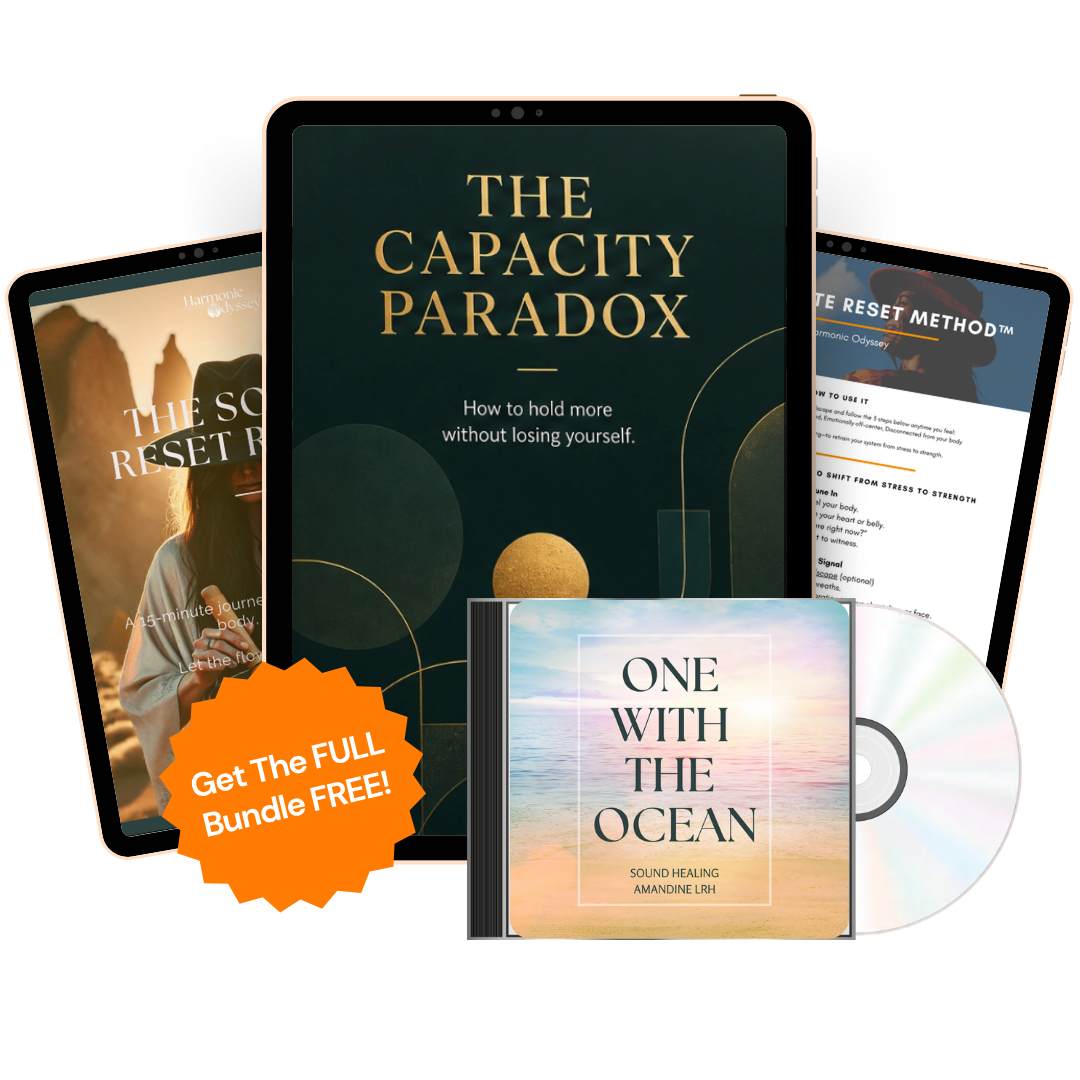
The Capacity Paradox
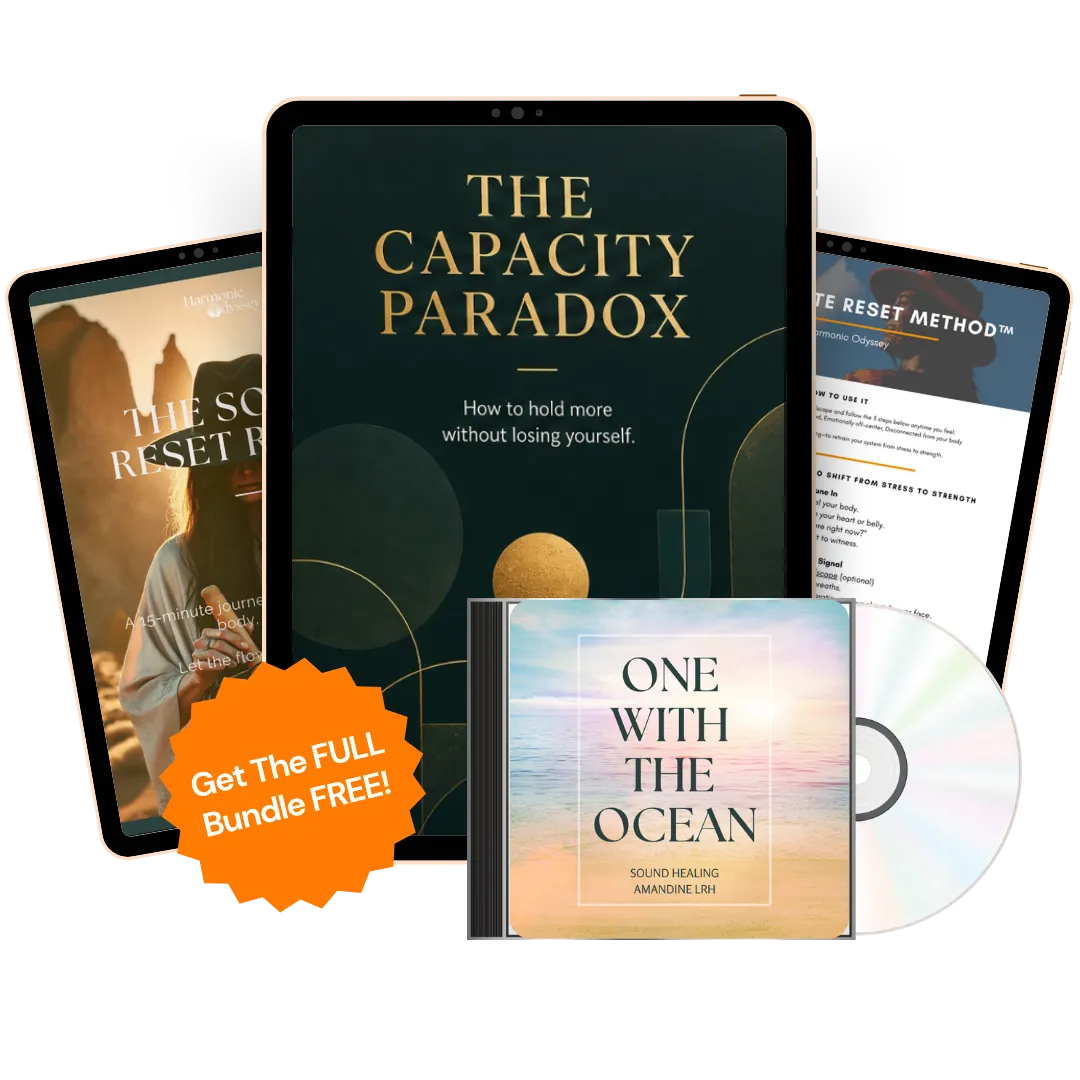
The Biological Architecture of OverwhelmDiscover the 3 high-performance habits keeping your body trapped in survival mode, and why trying harder is burning you out.
Access the Free BundleUpcoming Events
Sound Baths • RetreatsJoin in-person experiences where sound becomes ceremony. Find our next gathering in Central Oregon.
Explore Experiences
The Sacred Pause
multi sensory evening ritualJoin the soft evening revolution that will shift you out of survival mode and into restorative rest. A unique blend of somatic tools, soothing sounds and multi sensory experience your system has been craving.
Join The Revolution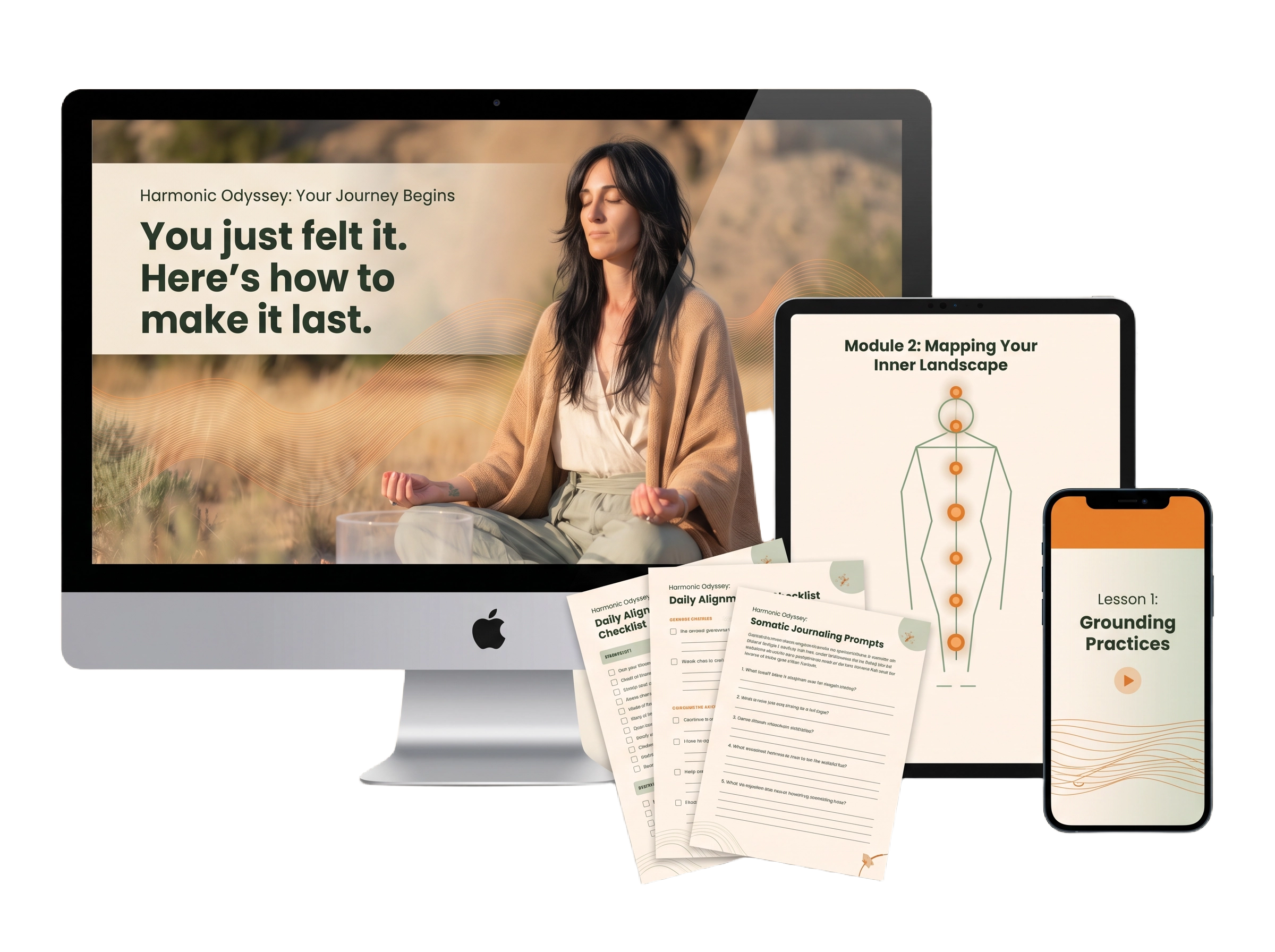
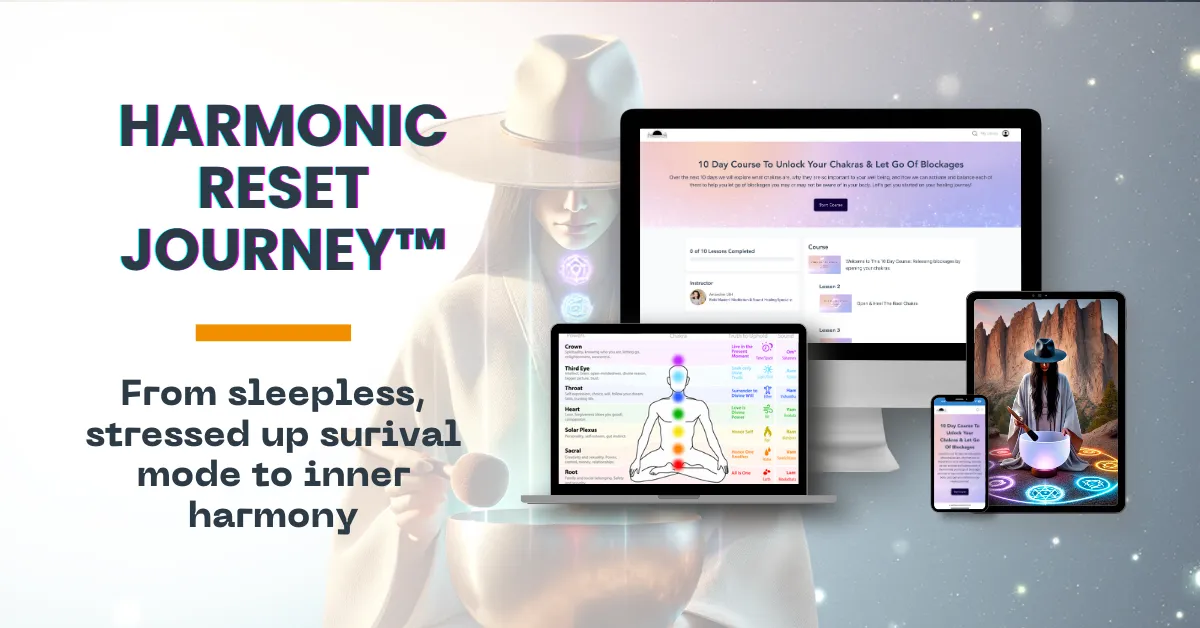
Harmonic Reset Journey
Exit survival mode and reclaim your capacity for rest and clarity in 10 days using precision frequencies.
Start Your Journey
The Regulated Shift™
Eight 60–75 minute private sessions scheduled over 10 weeks. A personalized journey for capable women ready to change the patterns that keep costing them their capacity.
Apply For Private WorkYou can’t discover new land by staring at the map.
When the body settles, attention naturally shifts —
away from analysis,
and toward what’s already true.
This is where the internal noise thins out.
Where intuition isn’t something you access,
it’s something you recognize.
Not silence.
The absence of static
You can’t discover new land by staring at the map.
When the body settles, attention naturally shifts
away from analysis,
and toward what’s already true.
This is where the internal noise thins out.
Where intuition isn’t something you access,
it’s something you recognize.
Not silence.
The absence of static
You can’t discover new land by staring at the map.
When the body settles, attention naturally shifts —
away from analysis,
and toward what’s already true.
This is where the internal noise thins out.
Where intuition isn’t something you access,
it’s something you recognize.
Not silence.
The absence of static
Why Sound?
Your nervous system doesn't speak words. It speaks frequency.
The Capacity Paradox + Why Sound?
Your nervous system doesn't speak words. It speaks frequency.
Sound works because it speaks directly to the nervous system — bypassing the mind and meeting the body first.
Specific frequencies, rhythms, and vibrations help the body recognize safety, slow the stress response, and re-establish internal coherence.
This isn’t about forcing calm.
It’s about giving the body the signal it’s been missing.
It can feel like magic. It works like biology.
Sound works because it speaks directly to the nervous system — bypassing the mind and meeting the body first.
Specific frequencies, rhythms, and vibrations help the body recognize safety, slow the stress response, and re-establish internal coherence.
This isn’t about forcing calm.
It’s about giving the body the signal it’s been missing.
It can feel like magic. It works like biology.
Start with the 3-Minute Clarity Reset.
Stop the spiral. Clear the static. In under 180 seconds.
Most people try to think their way out of stress.
It rarely works.
The 3-Minute Reset is a short, embodied regulation protocol —
using breath, gentle humming, and focused presence —
to help the nervous system settle quickly so clarity can return.
You use it:
- before a meeting
- before a difficult conversation
- when urgency takes over
- or when you feel disconnected from your body
You don’t need silence.
You don’t need an hour.
You don’t need to “figure anything out.”
You just follow the sequence.
Free • Instant access • Use anytime
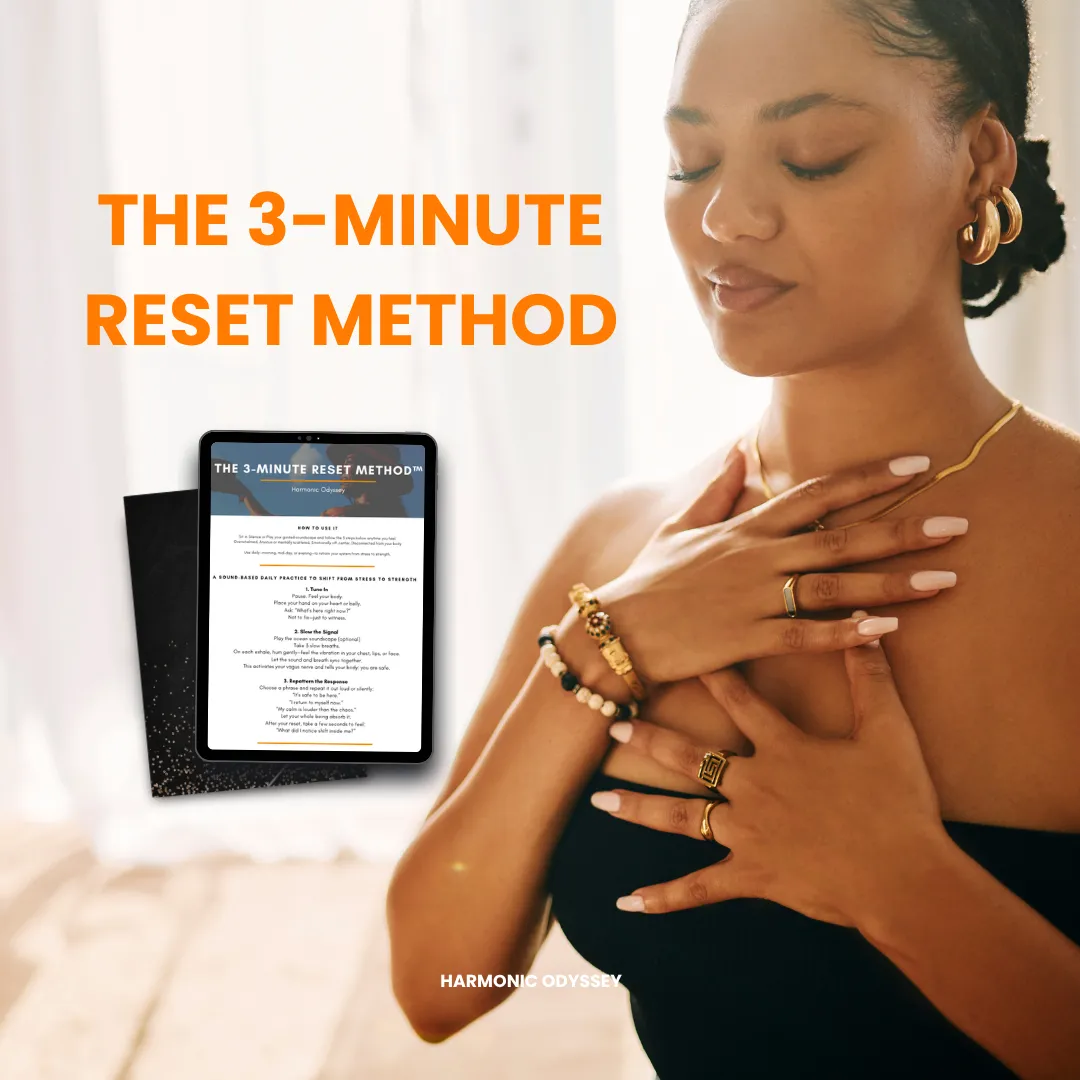
What you’ll receive:
A short, simple and powerful PDF guide
A simple practice you can return to anytime you feel overwhelmed
A simple, science-backed practice to help your body shift out of stress — without forcing calm or changing your mindset.
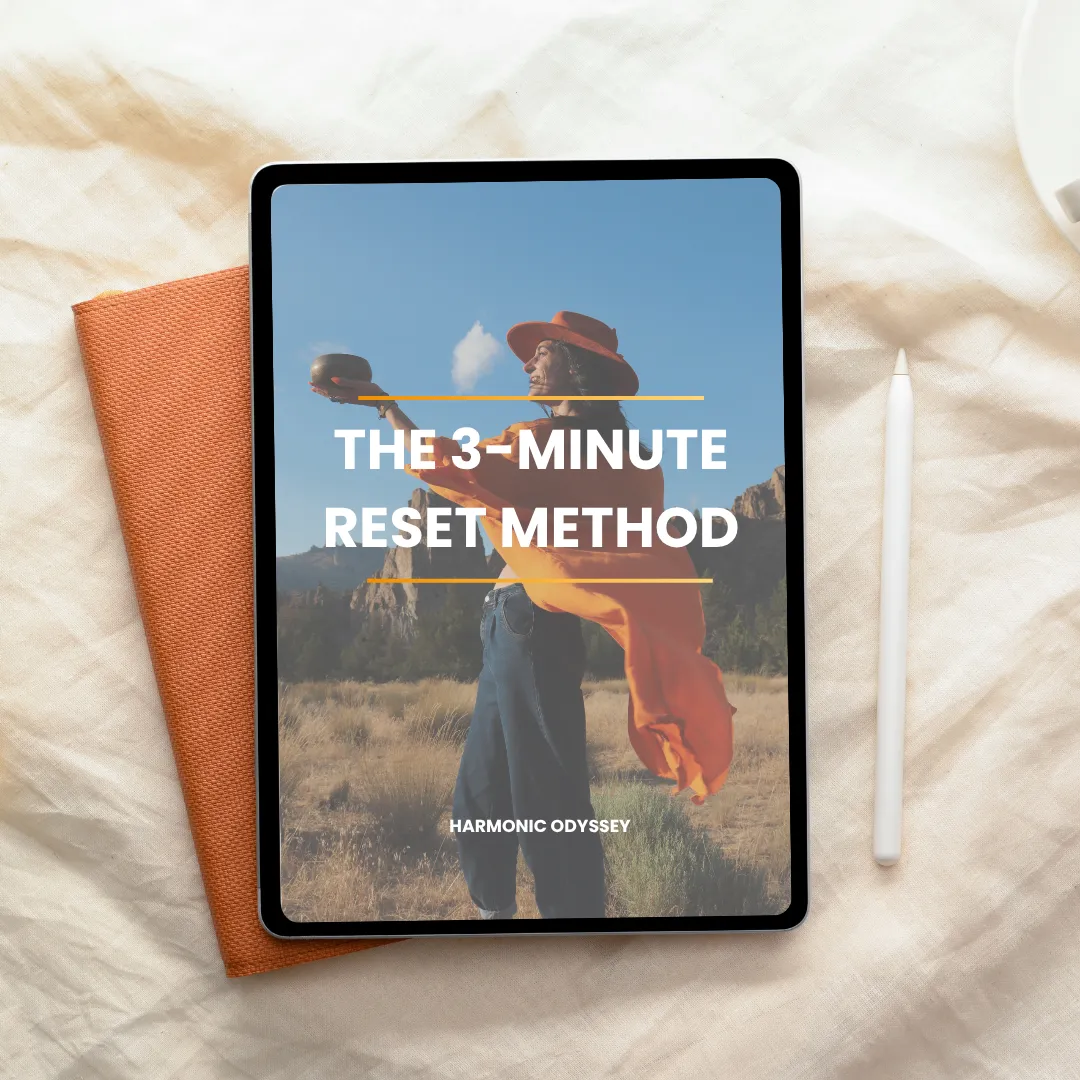
In just a few minutes, you may notice:
- Less internal noise
- A subtle sense of grounding
- More space between your thoughts
- A return to yourself — even briefly
This isn’t about fixing anything.
It’s about giving your nervous system the signal it needs to recalibrate.
Free • Instant access • Use anytime
Small shifts like this one are often enough to remember:
clarity doesn’t require effort — it requires the right signal.
Insight is a map. Experience is the journey.
If thinking could have fixed it, it would be fixed by now.
True clarity requires a shift in your internal architecture—a transition from "knowing" to being.
In this 30-minute Sound & Somatic Session, we stop talking about the stress and start clearing the path.
Using a sequence of meditation and frequency, we anchor you back into a state of safety that stays with you long after the sound fades.
If thinking could have fixed it, it would be fixed by now.
True clarity requires a shift in your internal architecture—a transition from "knowing" to being.
In this 30-minute Sound & Somatic Session, we stop talking about the stress and start clearing the path.
Using a sequence of meditation and frequency, we anchor you back into a state of safety that stays with you long after the sound fades.
Your Nervous System Is Ready
Stop fighting your biology. Understand it.
Join 17,000+ people who have shifted out of burnout cycle.
If thinking could have fixed it, it would be fixed by now.
True clarity requires a shift in your internal architecture—a transition from "knowing" to being.
In this 30-minute Sound & Somatic Session, we stop talking about the stress and start clearing the path.
Using a sequence of meditation and frequency, we anchor you back into a state of safety that stays with you long after the sound fades.
When the body settles, problems become solvable.
True Clarity Requires Both Strategy and Serenity.
Most approaches address only half of the equation.
Traditional coaching focuses on the mind, analyzing and strategizing.
Healing modalities focus on the body—releasing and relaxing.
My method integrates Sound Healing, Somatic Regulation, and Embodied Guidance into one cohesive journey.
We don't just calm your nervous system; we use that grounded state as the foundation for the life you're actually meant to live — whether that's setting boundaries, navigating a transition, or reclaiming your energy from burnout.
This work blends nervous system regulation, sound, and real-life transition.
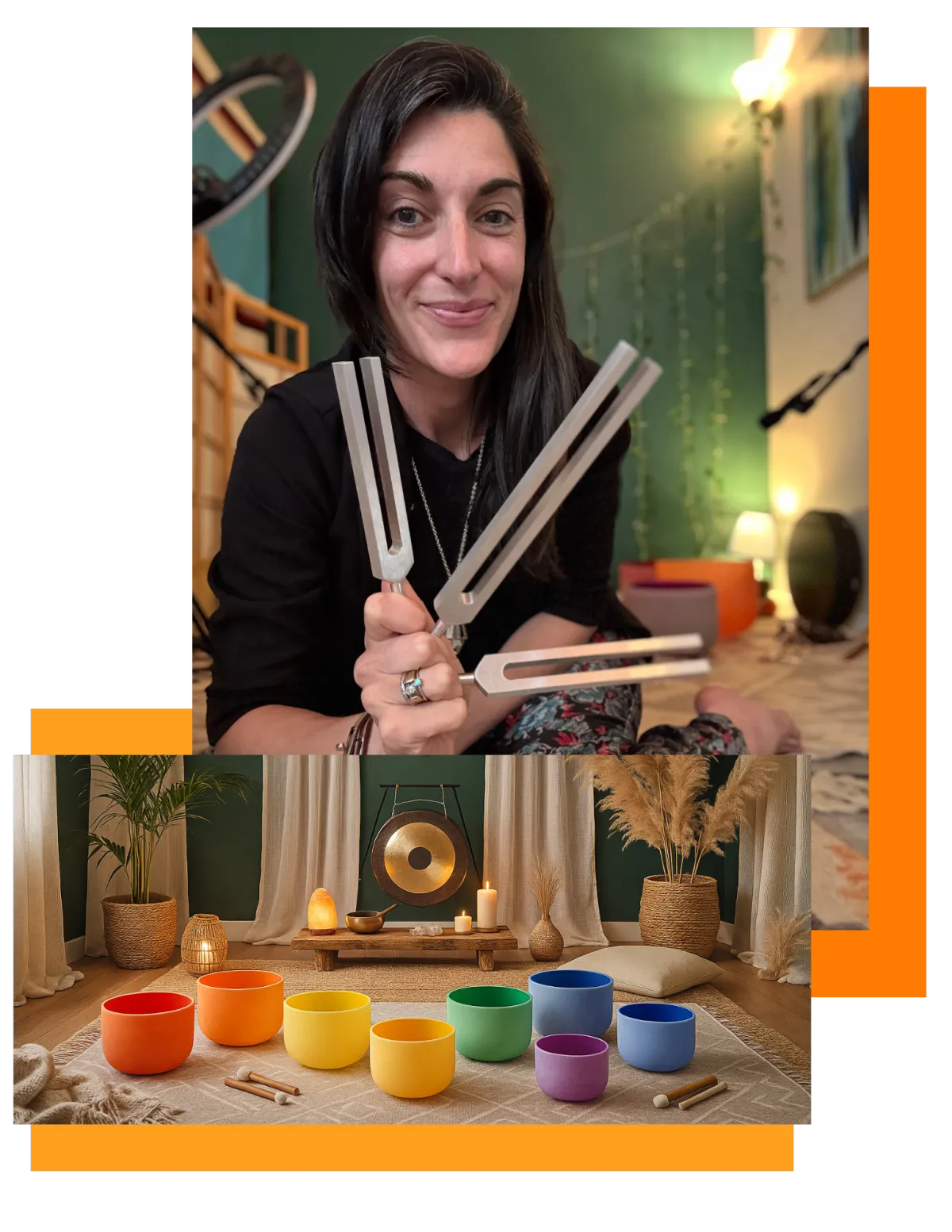
My background is in branding and communication — helping people clarify their message and express what they offer with precision.
Over time, sound and intuitive healing became the way I support the moments when clarity isn’t accessible through thinking alone.
Working with the body first helps clarity and direction return naturally.

Grounded, science-informed practices — guided with care and precision.
— Amandine Le Roux Hancock, founder of Harmonic Odyssey

Featured In



The Roadmap to Your Next Chapter
A BIOLOGICAL APPROACH TO CLARITY
You don’t need more pressure to 'figure it out.'
You need a sequence that works with your biology, not against it. We move from safety to connection, and finally, to strategy

Reset
Quiet the internal noise.
We start by shifting your nervous system out of 'survival mode' and into safety. Using sound frequencies, we down-regulate the stress response so your body can stop fighting and start resting.
This step is about:
Goal: Signaling safety to the body.
Result: Replacing anxiety
with physiological calm.
Tool: The 3-Minute Clarity Reset.
A short, intentional practice to help your body shift out of stress and return to a baseline of calm and clarity.
(What the 3 Minutes Reset Method helps you achieve)

Understand
Hear your own signal again.
Once the static of stress settles, we bypass the analytical mind to access your intuition. This is where you remember who you are outside of your titles, obligations, and burnout.
This step is about:
Goal: Accessing the subconscious mind.
Result: Distinguishing fear from intuition.
Tool: Deep Sound Immersion & Guided Inquiry or the Harmonic Reset Workshop
Realign
Design your new chapter.
With a regulated system and clear intuition, strategy becomes easy. We map out your next steps—whether it's a career pivot, a business launch, or a lifestyle shift—from a place of certainty.
This step supports:
Goal: Turning clarity into action.
Result: Making life decisions without urgency or doubt.
Tool: Strategic Coaching & Integration. (application only)
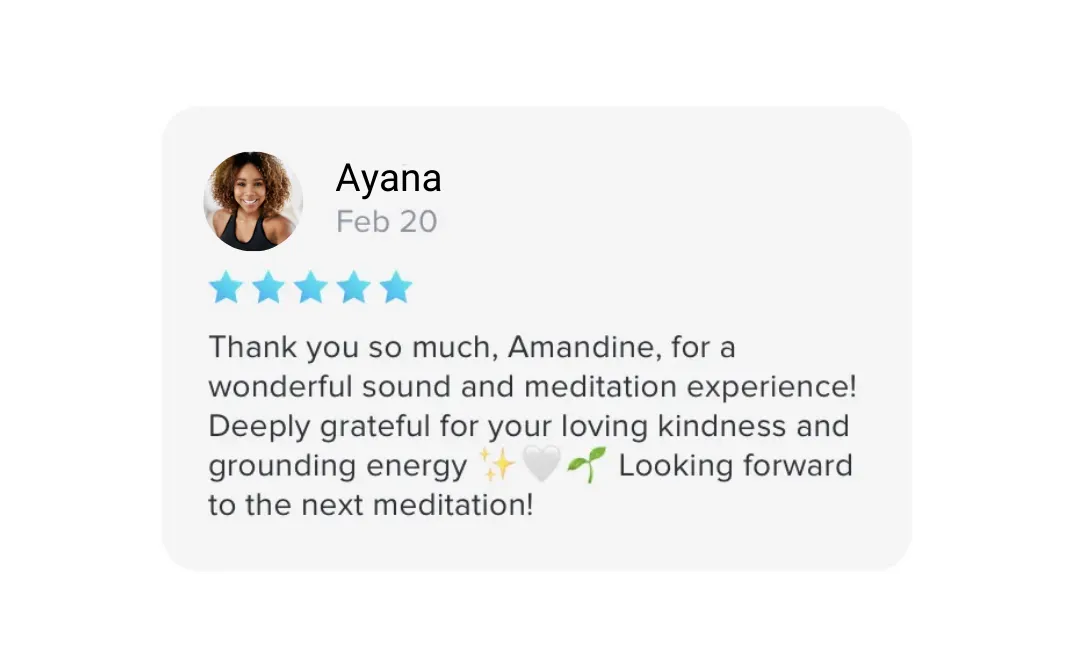
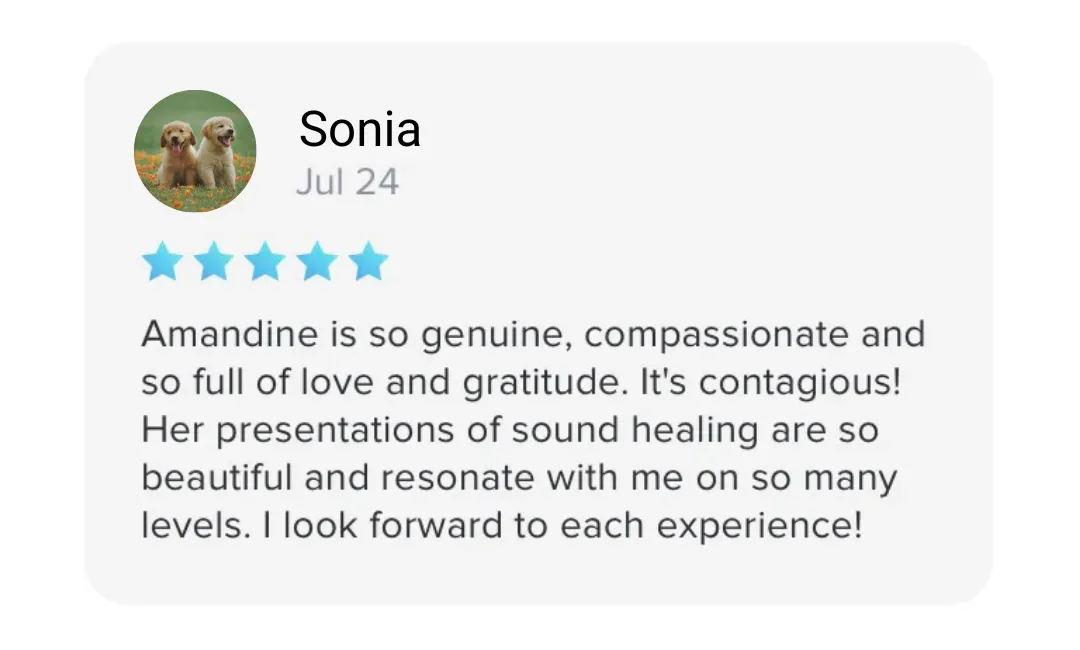
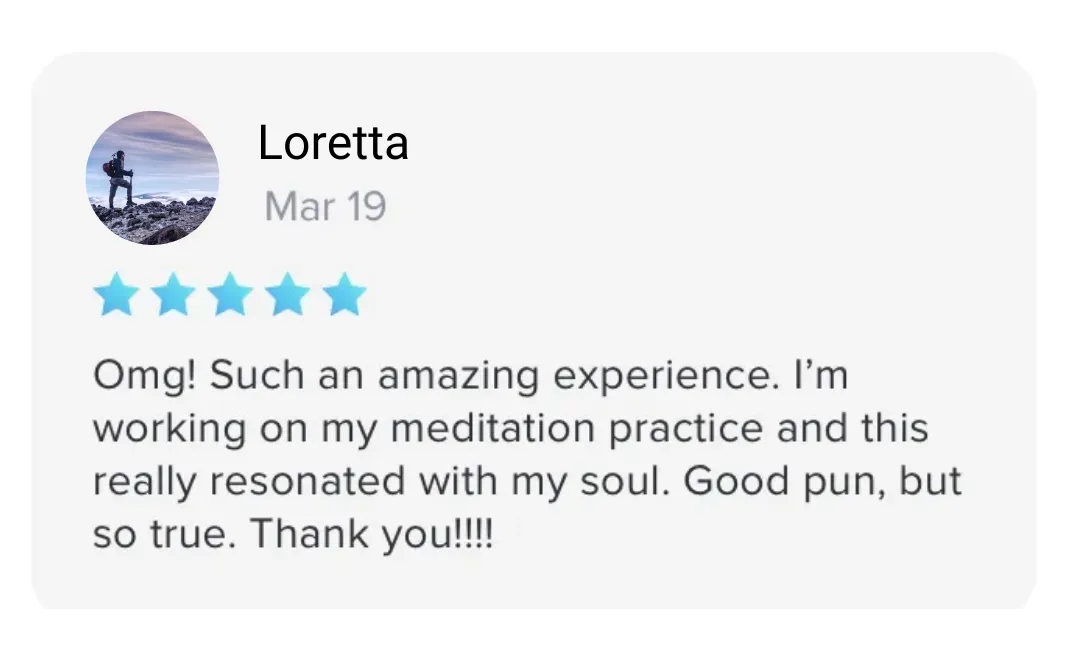
Join Over 17,000 People Who Have Found Their Reset.
My students come from all walks of life.
Read from their experience.






If you're navigating a deeper or longer transition — professional, personal, or internal — there are ways to work together beyond a single session. These paths are designed for those who want sustained support, clarity, and integration over time.
Questions You Might Be Asking
If you're wondering whether this is right for you, you're not alone. Here's what people ask before they start.
Yes. Most meditation apps ask you to quiet your mind through effort — focusing on breath, clearing thoughts, visualizing calm.
This works differently. Sound frequencies don't ask your mind to do anything. They bypass cognition entirely and speak directly to your nervous system, creating a physiological shift before your thinking brain even registers it.
You're not trying to relax. Your body is receiving a signal it recognizes as safety, and regulation happens as a biological response — not a mental achievement.
No. This work is grounded in nervous system science and acoustic physics, not dogma.
You don't need to believe in chakras, crystals, or energy fields for sound to work on your body. Specific frequencies influence brainwave states and vagal tone — that's measurable biology, not mysticism.
I do reference energy and resonance because they're useful frameworks, but if that language doesn't resonate with you, focus on this: your nervous system doesn't speak words. It speaks frequency. That's the foundation of everything here.
Calm music can be soothing, but it's not designed to regulate your nervous system at a biological level.
Precision sound work uses specific frequencies (432Hz, 528Hz, binaural beats) calibrated to influence brainwave patterns, slow your heart rate, and activate your vagus nerve — the main pathway between your brain and your body's stress response.
It's the difference between background noise that feels nice and a targeted intervention that changes your physiology.
Because most approaches try to fix burnout, anxiety, or overwhelm at the level of the mind — through insight, reframing, willpower, or positive thinking.
But if your nervous system is locked in survival mode, your thinking brain is offline. You can't "mindset" your way out of a dysregulated body.
This work starts with the body first. Once your nervous system feels safe, clarity, motivation, and decision-making return naturally — not because you forced them, but because the biological conditions for them are finally present.
Yes. In fact, many people find this work because traditional approaches haven't addressed the nervous system component of these experiences.
Sound-based regulation is gentle, non-verbal, and doesn't require you to "sit still and clear your mind" — which can feel impossible when your system is activated.
That said, this is not a replacement for medical or therapeutic care. It's a complementary tool that works alongside whatever support you're already receiving. If you're working with a therapist or doctor, this can enhance that work by helping your body settle enough to actually process what you're learning.
The free Sound Reset Workshop gives you an experience of what regulation feels like and introduces you to the core method. You'll leave with a felt sense of what's possible when your nervous system shifts.
The 10-Minute Serenity Challenge ($49) gives you 21 days of short daily practices — ideal if you want something simple you can return to regularly without a big time commitment.
The Harmonic Reset Journey ($197) is a 10-day deep-dive that teaches your body how to exit survival mode and stay regulated. It's structured, cumulative, and designed to create lasting change — not just temporary relief.
The Regulated Shift ($997) is a 4-week live cohort where we don't just reset your nervous system — we rebuild your life from that regulated foundation. This is for people navigating major transitions who need sustained support and integration.
Two things: nervous system science and strategic integration.
Most sound healing is presented as relaxation or spiritual practice. That's valuable, but it often stays at the surface level — you feel calm in the moment, but the patterns return.
My work bridges sound healing and somatic regulation to create lasting nervous system shifts, then uses that regulated state as the foundation for strategic life decisions — whether that's a career pivot, boundary-setting, or building something new.
I come from 18 years in branding and strategic communication. I know how to help people clarify what they're building and express it with precision. Sound is the tool that makes that clarity accessible when thinking alone can't get you there.
No. The biological effects of sound frequencies happen whether you believe in the framework or not.
I sometimes reference chakras and energy centers because they're useful maps for understanding where the body holds tension and how sound affects different areas. But you can think of them as anatomical regions with specific nerve clusters if that makes more sense to you.
What matters is this: your nervous system responds to frequency. That's physics and biology. The rest is just language.
Field Notes from the Odyssey

Quiet Cost of Staying Where You’ve Outgrown | Reinvent Yourself
The Quiet Cost of Staying Where You’ve Outgrown

There’s a particular kind of tired that doesn’t come from doing too much.
It comes from being slightly misaligned for too long.
You’re still competent.
Still responsible.
Still the one people trust.
But when you pause—even briefly—there’s a subtle contraction.
A quiet thought you rarely say out loud:
This version of my life doesn’t fully fit anymore.
Not because it’s bad.
Because you’ve grown.
When Success Stops Feeling Expansive
Most high-achieving adults don’t fall apart when something no longer fits.
They adapt.
You become more efficient.
More composed.
More capable.
And quietly, more contained.
You might notice:
A low-grade sense of feeling stuck in life
A thinning connection to your original life purpose
Rest that doesn’t quite restore you
Motivation that feels functional rather than alive
Nothing is wrong.
But something feels complete.
This is often the early signal that it may be time to reinvent yourself—not impulsively, but consciously.
A small pause
Before going further, notice your body.
Is your jaw slightly tight?
Are your shoulders subtly lifted?
Let them soften.
Then ask, gently:
Where in my life am I exerting effort to maintain something that feels finished?
No action required. Just awareness.
The Nervous System Cost of Staying Too Long
When your inner growth surpasses your outer structure, your nervous system compensates.
It narrows.
It braces.
It conserves energy.
Research in stress physiology shows that chronic low-grade activation reduces cognitive flexibility and creative capacity. In simple terms: when you stay misaligned, your world gets smaller.
Not dramatically.
Incrementally.
This is the quiet cost.
Over time, you may begin to interpret this as burnout. Or indecision. Or lack of clarity.
But often, it’s something more honest.
It’s the early edge of personal reinvention.
Why Capable People Postpone Self-Reinvention
Responsible adults don’t make reckless moves.
You consider stability.
You think long-term.
You care about impact.
So when the impulse to reinvent yourself arises, you don’t rush.
You wait.
You tell yourself:
After this milestone.
After this quarter.
After things settle.
Meanwhile, the subtle tension grows.
Not because you’re failing.
Because your system knows that personal growth has already occurred internally—and your outer life hasn’t caught up.
Reinvent Yourself Without Collapse

There’s a cultural myth that reinvention requires rupture.
It doesn’t.
Grounded personal reinvention is rarely dramatic. It’s integrative.
It may look like:
Redefining what success means now
Re-evaluating your relationship to work
Revisiting your sense of life purpose
Exploring self-reinvention privately before announcing anything publicly
This is not escapism.
It’s alignment.
To reinvent yourself in a regulated way means allowing your external structures to reflect who you have already become.
That is personal transformation without self-abandonment.
Another pause
Place one hand on your chest.
Notice your breath without changing it.
Ask:
What feels underused in me right now?
Stay with whatever arises.
Even if it’s vague.
When Feeling Stuck Is Actually Readiness
Many high-functioning adults interpret feeling stuck in life as a problem to solve.
Often, it is readiness without permission.
Your inner development has expanded.
Your tolerance for misalignment has decreased.
Your desire for meaningful life transformation is less about ambition and more about coherence.
This is not instability.
It is maturity.
The question is not whether you will change.
It is whether you will do so consciously—with regulation rather than reaction.
Aligned Reinvention™
At Harmonic Odyssey, reinvention begins with the nervous system.
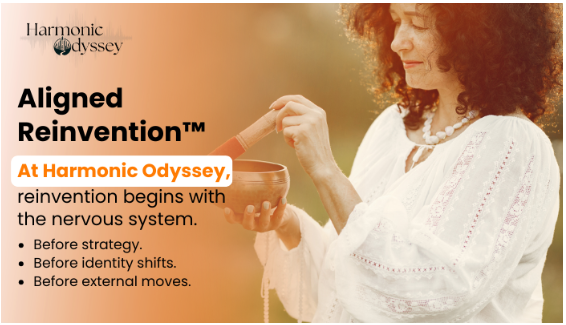
Before strategy.
Before identity shifts.
Before external moves.
Aligned Reinvention integrates regulation, somatic awareness, and grounded reflection so that personal reinvention feels steady rather than destabilizing.
You don’t need to dismantle your life.
You need clarity that feels safe in your body.
A simple place to start is this:
Sit upright but supported.
Exhale slightly longer than you inhale.
Three slow rounds.
Then ask:
If I trusted my growth, what would I allow to shift?
Not what would I escape.
What would I allow.
If you want to feel this, not just understand it, Harmonic Odyssey offers a gentle nervous-system reset practice designed for high-functioning adults navigating personal transformation and sustainable personal growth.
You don’t need to do everything.
Just one small step toward coherence.
For organizations and leadership teams exploring embodied self-reinvention and meaningful life transformation, keynotes and workshops offer deeper containers for this work.
Quiet Questions You May Be Holding
What if nothing is technically wrong?
Nothing needs to be wrong for something to be complete.
What if I’m just restless?
Restlessness feels agitated. Growth feels steady, even when uncomfortable.
Is wanting change irresponsible?
Not when it comes from clarity rather than impulse.
A Quiet Permission to Evolve
You are not ungrateful for sensing misalignment.
You are not unstable for outgrowing a role you once loved.
And you are allowed to reinvent yourself — quietly, intelligently, without collapse.
Sometimes the most responsible choice is letting your outer life reflect your inner evolution.
That doesn’t require urgency.
Just honesty.
And a nervous system steady enough to listen.

Quiet Cost of Staying Where You’ve Outgrown | Reinvent Yourself
The Quiet Cost of Staying Where You’ve Outgrown
There’s a particular kind of tired that doesn’t come from doing too much.
It comes from being slightly misaligned for too long.
You’re still competent.
Still responsible.
Still the one people trust.
But when you pause—even briefly—there’s a subtle contraction.
A quiet thought you rarely say out loud:
This version of my life doesn’t fully fit anymore.
Not because it’s bad.
Because you’ve grown.
When Success Stops Feeling Expansive
Most high-achieving adults don’t fall apart when something no longer fits.
They adapt.
You become more efficient.
More composed.
More capable.
And quietly, more contained.
You might notice:
A low-grade sense of feeling stuck in life
A thinning connection to your original life purpose
Rest that doesn’t quite restore you
Motivation that feels functional rather than alive
Nothing is wrong.
But something feels complete.
This is often the early signal that it may be time to reinvent yourself—not impulsively, but consciously.
A small pause
Before going further, notice your body.
Is your jaw slightly tight?
Are your shoulders subtly lifted?
Let them soften.
Then ask, gently:
Where in my life am I exerting effort to maintain something that feels finished?
No action required. Just awareness.
The Nervous System Cost of Staying Too Long
When your inner growth surpasses your outer structure, your nervous system compensates.
It narrows.
It braces.
It conserves energy.
Research in stress physiology shows that chronic low-grade activation reduces cognitive flexibility and creative capacity. In simple terms: when you stay misaligned, your world gets smaller.
Not dramatically.
Incrementally.
This is the quiet cost.
Over time, you may begin to interpret this as burnout. Or indecision. Or lack of clarity.
But often, it’s something more honest.
It’s the early edge of personal reinvention.
Why Capable People Postpone Self-Reinvention
Responsible adults don’t make reckless moves.
You consider stability.
You think long-term.
You care about impact.
So when the impulse to reinvent yourself arises, you don’t rush.
You wait.
You tell yourself:
After this milestone.
After this quarter.
After things settle.
Meanwhile, the subtle tension grows.
Not because you’re failing.
Because your system knows that personal growth has already occurred internally—and your outer life hasn’t caught up.
Reinvent Yourself Without Collapse
There’s a cultural myth that reinvention requires rupture.
It doesn’t.
Grounded personal reinvention is rarely dramatic. It’s integrative.
It may look like:
Redefining what success means now
Re-evaluating your relationship to work
Revisiting your sense of life purpose
Exploring self-reinvention privately before announcing anything publicly
This is not escapism.
It’s alignment.
To reinvent yourself in a regulated way means allowing your external structures to reflect who you have already become.
That is personal transformation without self-abandonment.
Another pause
Place one hand on your chest.
Notice your breath without changing it.
Ask:
What feels underused in me right now?
Stay with whatever arises.
Even if it’s vague.
When Feeling Stuck Is Actually Readiness
Many high-functioning adults interpret feeling stuck in life as a problem to solve.
Often, it is readiness without permission.
Your inner development has expanded.
Your tolerance for misalignment has decreased.
Your desire for meaningful life transformation is less about ambition and more about coherence.
This is not instability.
It is maturity.
The question is not whether you will change.
It is whether you will do so consciously—with regulation rather than reaction.
Aligned Reinvention™
At Harmonic Odyssey, reinvention begins with the nervous system.
Before strategy.
Before identity shifts.
Before external moves.
Aligned Reinvention integrates regulation, somatic awareness, and grounded reflection so that personal reinvention feels steady rather than destabilizing.
You don’t need to dismantle your life.
You need clarity that feels safe in your body.
A simple place to start is this:
Sit upright but supported.
Exhale slightly longer than you inhale.
Three slow rounds.
Then ask:
If I trusted my growth, what would I allow to shift?
Not what would I escape.
What would I allow.
If you want to feel this, not just understand it, Harmonic Odyssey offers a gentle nervous-system reset practice designed for high-functioning adults navigating personal transformation and sustainable personal growth.
You don’t need to do everything.
Just one small step toward coherence.
For organizations and leadership teams exploring embodied self-reinvention and meaningful life transformation, keynotes and workshops offer deeper containers for this work.
Quiet Questions You May Be Holding
What if nothing is technically wrong?
Nothing needs to be wrong for something to be complete.
What if I’m just restless?
Restlessness feels agitated. Growth feels steady, even when uncomfortable.
Is wanting change irresponsible?
Not when it comes from clarity rather than impulse.
A Quiet Permission to Evolve
You are not ungrateful for sensing misalignment.
You are not unstable for outgrowing a role you once loved.
And you are allowed to reinvent yourself — quietly, intelligently, without collapse.
Sometimes the most responsible choice is letting your outer life reflect your inner evolution.
That doesn’t require urgency.
Just honesty.
And a nervous system steady enough to listen.
Field Notes from the Odyssey
Quiet Cost of Staying Where You’ve Outgrown | Reinvent Yourself
The Quiet Cost of Staying Where You’ve Outgrown
There’s a particular kind of tired that doesn’t come from doing too much.
It comes from being slightly misaligned for too long.
You’re still competent.
Still responsible.
Still the one people trust.
But when you pause—even briefly—there’s a subtle contraction.
A quiet thought you rarely say out loud:
This version of my life doesn’t fully fit anymore.
Not because it’s bad.
Because you’ve grown.
When Success Stops Feeling Expansive
Most high-achieving adults don’t fall apart when something no longer fits.
They adapt.
You become more efficient.
More composed.
More capable.
And quietly, more contained.
You might notice:
A low-grade sense of feeling stuck in life
A thinning connection to your original life purpose
Rest that doesn’t quite restore you
Motivation that feels functional rather than alive
Nothing is wrong.
But something feels complete.
This is often the early signal that it may be time to reinvent yourself—not impulsively, but consciously.
A small pause
Before going further, notice your body.
Is your jaw slightly tight?
Are your shoulders subtly lifted?
Let them soften.
Then ask, gently:
Where in my life am I exerting effort to maintain something that feels finished?
No action required. Just awareness.
The Nervous System Cost of Staying Too Long
When your inner growth surpasses your outer structure, your nervous system compensates.
It narrows.
It braces.
It conserves energy.
Research in stress physiology shows that chronic low-grade activation reduces cognitive flexibility and creative capacity. In simple terms: when you stay misaligned, your world gets smaller.
Not dramatically.
Incrementally.
This is the quiet cost.
Over time, you may begin to interpret this as burnout. Or indecision. Or lack of clarity.
But often, it’s something more honest.
It’s the early edge of personal reinvention.
Why Capable People Postpone Self-Reinvention
Responsible adults don’t make reckless moves.
You consider stability.
You think long-term.
You care about impact.
So when the impulse to reinvent yourself arises, you don’t rush.
You wait.
You tell yourself:
After this milestone.
After this quarter.
After things settle.
Meanwhile, the subtle tension grows.
Not because you’re failing.
Because your system knows that personal growth has already occurred internally—and your outer life hasn’t caught up.
Reinvent Yourself Without Collapse
There’s a cultural myth that reinvention requires rupture.
It doesn’t.
Grounded personal reinvention is rarely dramatic. It’s integrative.
It may look like:
Redefining what success means now
Re-evaluating your relationship to work
Revisiting your sense of life purpose
Exploring self-reinvention privately before announcing anything publicly
This is not escapism.
It’s alignment.
To reinvent yourself in a regulated way means allowing your external structures to reflect who you have already become.
That is personal transformation without self-abandonment.
Another pause
Place one hand on your chest.
Notice your breath without changing it.
Ask:
What feels underused in me right now?
Stay with whatever arises.
Even if it’s vague.
When Feeling Stuck Is Actually Readiness
Many high-functioning adults interpret feeling stuck in life as a problem to solve.
Often, it is readiness without permission.
Your inner development has expanded.
Your tolerance for misalignment has decreased.
Your desire for meaningful life transformation is less about ambition and more about coherence.
This is not instability.
It is maturity.
The question is not whether you will change.
It is whether you will do so consciously—with regulation rather than reaction.
Aligned Reinvention™
At Harmonic Odyssey, reinvention begins with the nervous system.
Before strategy.
Before identity shifts.
Before external moves.
Aligned Reinvention integrates regulation, somatic awareness, and grounded reflection so that personal reinvention feels steady rather than destabilizing.
You don’t need to dismantle your life.
You need clarity that feels safe in your body.
A simple place to start is this:
Sit upright but supported.
Exhale slightly longer than you inhale.
Three slow rounds.
Then ask:
If I trusted my growth, what would I allow to shift?
Not what would I escape.
What would I allow.
If you want to feel this, not just understand it, Harmonic Odyssey offers a gentle nervous-system reset practice designed for high-functioning adults navigating personal transformation and sustainable personal growth.
You don’t need to do everything.
Just one small step toward coherence.
For organizations and leadership teams exploring embodied self-reinvention and meaningful life transformation, keynotes and workshops offer deeper containers for this work.
Quiet Questions You May Be Holding
What if nothing is technically wrong?
Nothing needs to be wrong for something to be complete.
What if I’m just restless?
Restlessness feels agitated. Growth feels steady, even when uncomfortable.
Is wanting change irresponsible?
Not when it comes from clarity rather than impulse.
A Quiet Permission to Evolve
You are not ungrateful for sensing misalignment.
You are not unstable for outgrowing a role you once loved.
And you are allowed to reinvent yourself — quietly, intelligently, without collapse.
Sometimes the most responsible choice is letting your outer life reflect your inner evolution.
That doesn’t require urgency.
Just honesty.
And a nervous system steady enough to listen.
Quiet Cost of Staying Where You’ve Outgrown | Reinvent Yourself
The Quiet Cost of Staying Where You’ve Outgrown
There’s a particular kind of tired that doesn’t come from doing too much.
It comes from being slightly misaligned for too long.
You’re still competent.
Still responsible.
Still the one people trust.
But when you pause—even briefly—there’s a subtle contraction.
A quiet thought you rarely say out loud:
This version of my life doesn’t fully fit anymore.
Not because it’s bad.
Because you’ve grown.
When Success Stops Feeling Expansive
Most high-achieving adults don’t fall apart when something no longer fits.
They adapt.
You become more efficient.
More composed.
More capable.
And quietly, more contained.
You might notice:
A low-grade sense of feeling stuck in life
A thinning connection to your original life purpose
Rest that doesn’t quite restore you
Motivation that feels functional rather than alive
Nothing is wrong.
But something feels complete.
This is often the early signal that it may be time to reinvent yourself—not impulsively, but consciously.
A small pause
Before going further, notice your body.
Is your jaw slightly tight?
Are your shoulders subtly lifted?
Let them soften.
Then ask, gently:
Where in my life am I exerting effort to maintain something that feels finished?
No action required. Just awareness.
The Nervous System Cost of Staying Too Long
When your inner growth surpasses your outer structure, your nervous system compensates.
It narrows.
It braces.
It conserves energy.
Research in stress physiology shows that chronic low-grade activation reduces cognitive flexibility and creative capacity. In simple terms: when you stay misaligned, your world gets smaller.
Not dramatically.
Incrementally.
This is the quiet cost.
Over time, you may begin to interpret this as burnout. Or indecision. Or lack of clarity.
But often, it’s something more honest.
It’s the early edge of personal reinvention.
Why Capable People Postpone Self-Reinvention
Responsible adults don’t make reckless moves.
You consider stability.
You think long-term.
You care about impact.
So when the impulse to reinvent yourself arises, you don’t rush.
You wait.
You tell yourself:
After this milestone.
After this quarter.
After things settle.
Meanwhile, the subtle tension grows.
Not because you’re failing.
Because your system knows that personal growth has already occurred internally—and your outer life hasn’t caught up.
Reinvent Yourself Without Collapse
There’s a cultural myth that reinvention requires rupture.
It doesn’t.
Grounded personal reinvention is rarely dramatic. It’s integrative.
It may look like:
Redefining what success means now
Re-evaluating your relationship to work
Revisiting your sense of life purpose
Exploring self-reinvention privately before announcing anything publicly
This is not escapism.
It’s alignment.
To reinvent yourself in a regulated way means allowing your external structures to reflect who you have already become.
That is personal transformation without self-abandonment.
Another pause
Place one hand on your chest.
Notice your breath without changing it.
Ask:
What feels underused in me right now?
Stay with whatever arises.
Even if it’s vague.
When Feeling Stuck Is Actually Readiness
Many high-functioning adults interpret feeling stuck in life as a problem to solve.
Often, it is readiness without permission.
Your inner development has expanded.
Your tolerance for misalignment has decreased.
Your desire for meaningful life transformation is less about ambition and more about coherence.
This is not instability.
It is maturity.
The question is not whether you will change.
It is whether you will do so consciously—with regulation rather than reaction.
Aligned Reinvention™
At Harmonic Odyssey, reinvention begins with the nervous system.
Before strategy.
Before identity shifts.
Before external moves.
Aligned Reinvention integrates regulation, somatic awareness, and grounded reflection so that personal reinvention feels steady rather than destabilizing.
You don’t need to dismantle your life.
You need clarity that feels safe in your body.
A simple place to start is this:
Sit upright but supported.
Exhale slightly longer than you inhale.
Three slow rounds.
Then ask:
If I trusted my growth, what would I allow to shift?
Not what would I escape.
What would I allow.
If you want to feel this, not just understand it, Harmonic Odyssey offers a gentle nervous-system reset practice designed for high-functioning adults navigating personal transformation and sustainable personal growth.
You don’t need to do everything.
Just one small step toward coherence.
For organizations and leadership teams exploring embodied self-reinvention and meaningful life transformation, keynotes and workshops offer deeper containers for this work.
Quiet Questions You May Be Holding
What if nothing is technically wrong?
Nothing needs to be wrong for something to be complete.
What if I’m just restless?
Restlessness feels agitated. Growth feels steady, even when uncomfortable.
Is wanting change irresponsible?
Not when it comes from clarity rather than impulse.
A Quiet Permission to Evolve
You are not ungrateful for sensing misalignment.
You are not unstable for outgrowing a role you once loved.
And you are allowed to reinvent yourself — quietly, intelligently, without collapse.
Sometimes the most responsible choice is letting your outer life reflect your inner evolution.
That doesn’t require urgency.
Just honesty.
And a nervous system steady enough to listen.
Your Nervous System Is Ready
You just need to take the first step...
and let your body show you what's possible.
Join 10,000+ people who've stopped fighting
their nervous system and started
listening through this harmonic odyssey instead.

10 Day Journey | Instant Access
Let's Stay Connected







© 2026 Harmonic Odyssey by Amandine LRH - A Greener Life LLC, All Rights Reserved.