
Nervous System Regulation Through Sound
Your Nervous System Has Been Running on Survival Mode for Months
Your Nervous System Has Been Running on Survival Mode for too long.
IT ENDS NOW
You don't need another meditation app or breathing technique.
You need a Frequency Shifter — someone who can dissolve the energetic static keeping your body locked in threat response, and guide you back to the safety your nervous system has been craving.
Join 17,000+ people who've found their way back to regulation
Join 17,000+ people who've found their way back to regulation
Find Your Entry Point
Whether you're exploring for the first time or ready for deep transformation, there's a path designed for your biology.
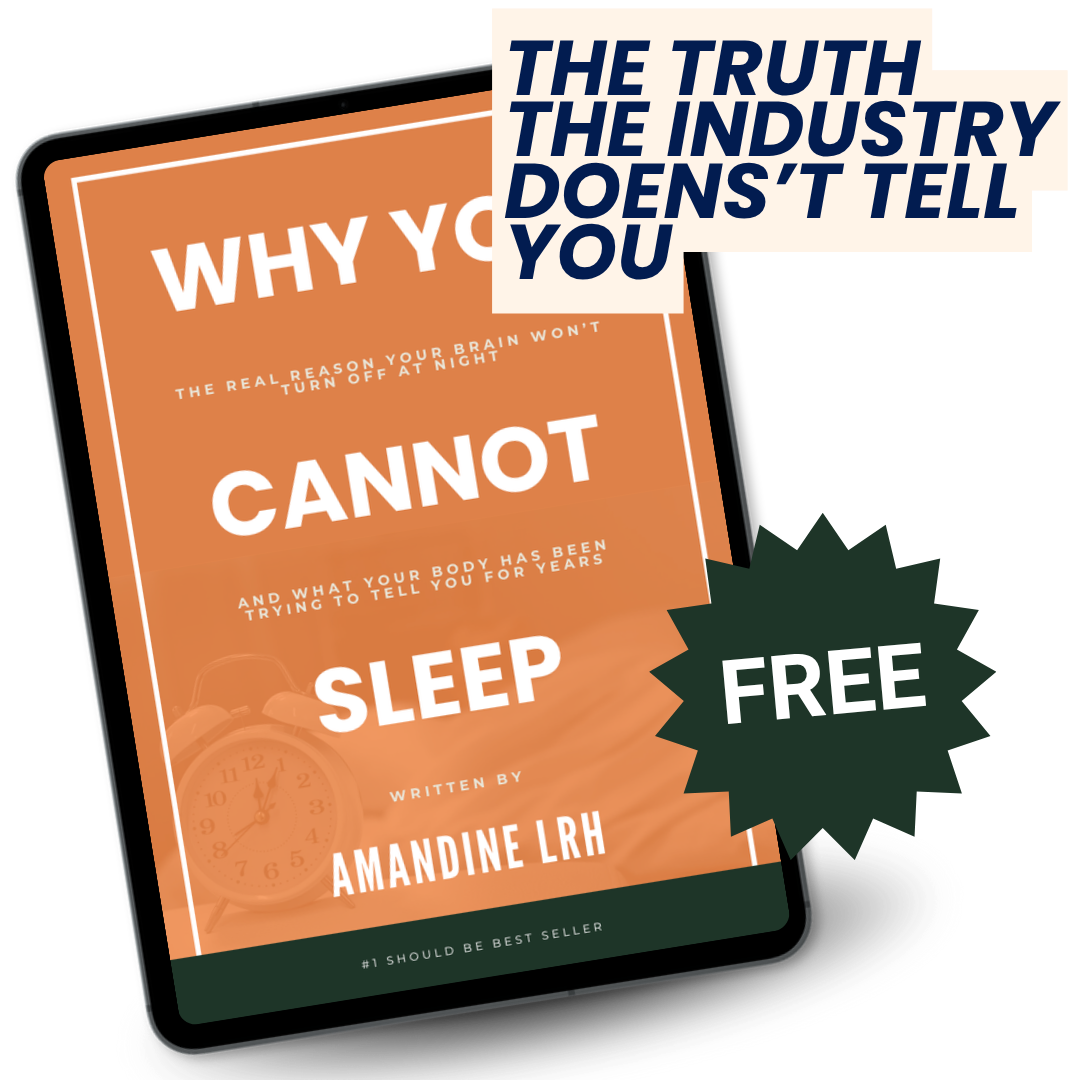
Why You Cannot Sleep
Foundations of SoundDiscover how sound frequencies shift your nervous system from survival mode to safety. A foundational guide for your journey.
Order the Free eBookUpcoming Events
Sound Baths • RetreatsJoin in-person experiences where sound becomes ceremony. Find our next gathering in Central Oregon.
Explore Experiences
Deep Sleep Reset
Deep Sound Wave + GuidanceShift out of survival mode and into restorative rest. Targeted frequency entrainment designed to quiet the mind and regulate your nervous system for deep, unbroken sleep.
Start Sleeping Better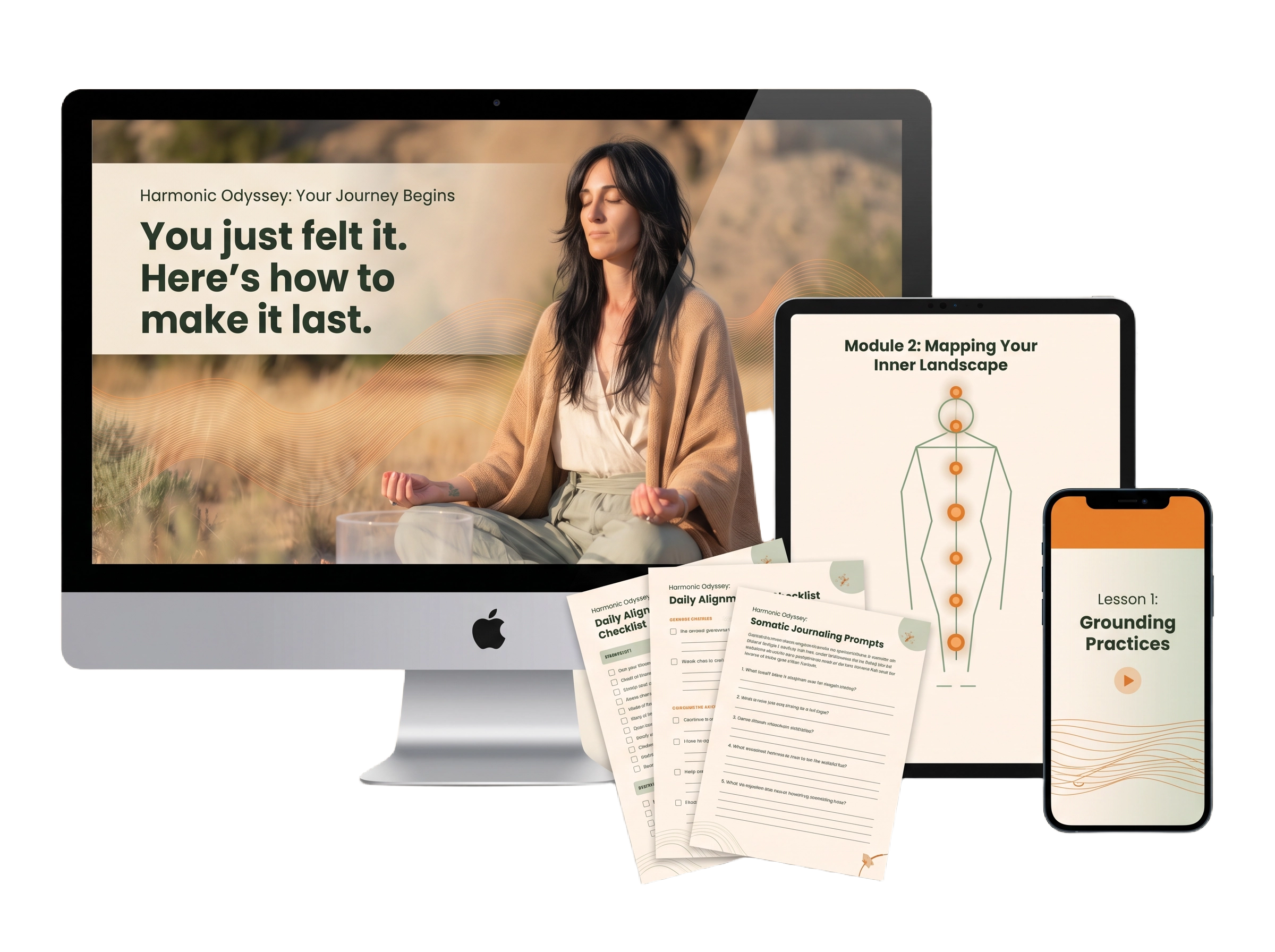
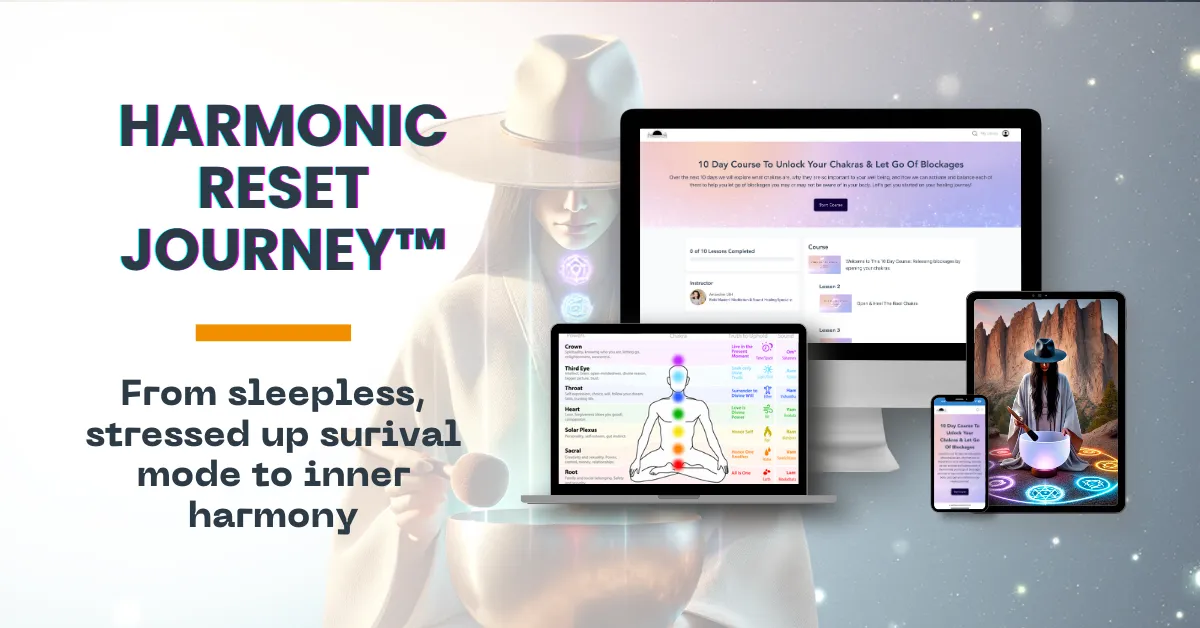
Harmonic Reset Journey
Exit survival mode and reclaim your capacity for rest and clarity in 10 days using precision frequencies.
Start Your Journey
The Regulated Shift
An 8-week guided container to restore sleep and rebuild your life from a regulated foundation.
Join the CohortYou can’t discover new land by staring at the map.
When the body settles, attention naturally shifts —
away from analysis,
and toward what’s already true.
This is where the internal noise thins out.
Where intuition isn’t something you access,
it’s something you recognize.
Not silence.
The absence of static
You can’t discover new land by staring at the map.
When the body settles, attention naturally shifts —
away from analysis,
and toward what’s already true.
This is where the internal noise thins out.
Where intuition isn’t something you access,
it’s something you recognize.
Not silence.
The absence of static
Why Sound?
Your nervous system doesn't speak words. It speaks frequency.
Why Sound?
Your nervous system doesn't speak words. It speaks frequency.
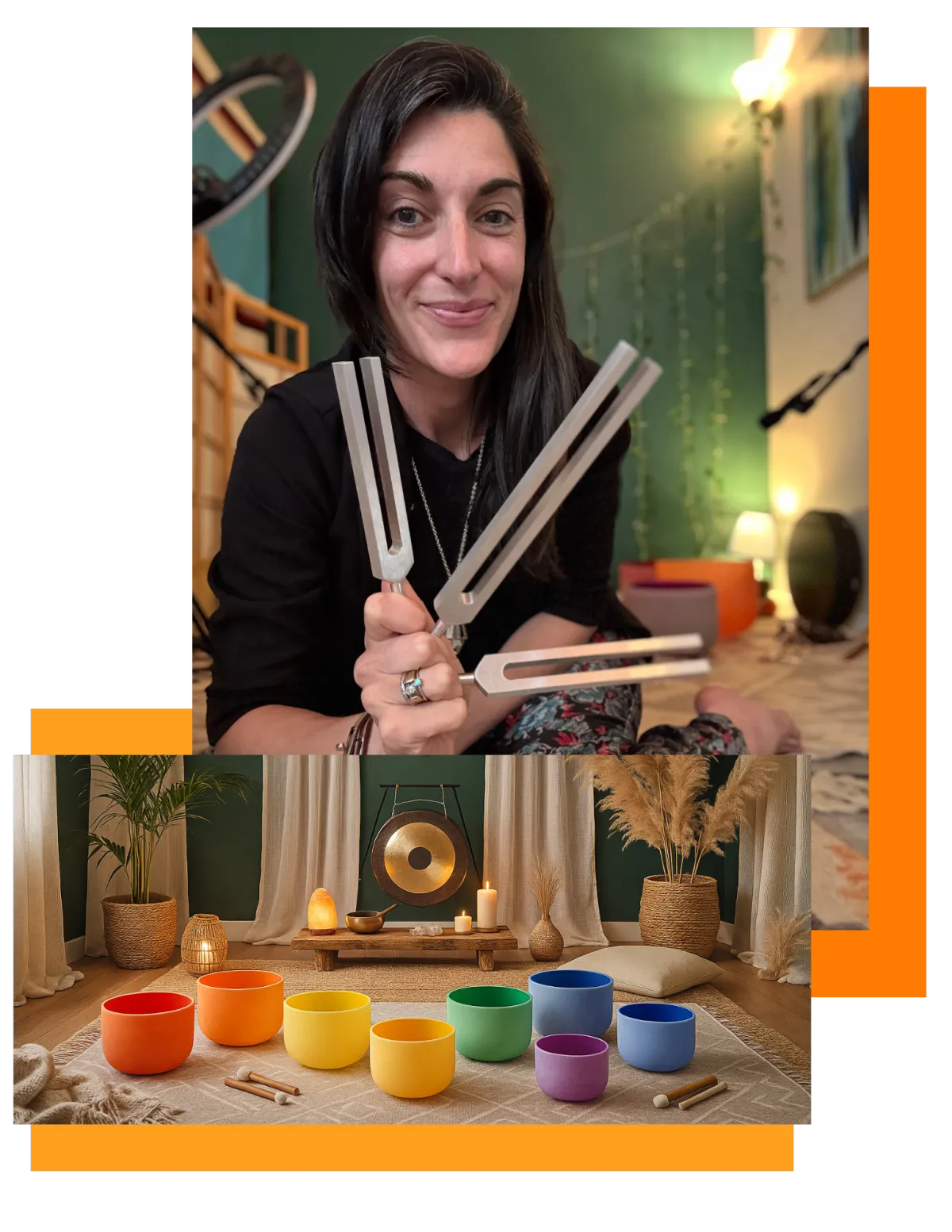
Sound works because it speaks directly to the nervous system — bypassing the mind and meeting the body first.
Specific frequencies, rhythms, and vibrations help the body recognize safety, slow the stress response, and re-establish internal coherence.
This isn’t about forcing calm.
It’s about giving the body the signal it’s been missing.
It can feel like magic. It works like biology.
Sound works because it speaks directly to the nervous system — bypassing the mind and meeting the body first.
Specific frequencies, rhythms, and vibrations help the body recognize safety, slow the stress response, and re-establish internal coherence.
This isn’t about forcing calm.
It’s about giving the body the signal it’s been missing.
It can feel like magic. It works like biology.
Start with the 3-Minute Clarity Reset.
Stop the spiral. Clear the static. In under 180 seconds.
Most people try to think their way out of stress.
It rarely works.
The 3-Minute Reset is a short, embodied regulation protocol —
using breath, gentle humming, and focused presence —
to help the nervous system settle quickly so clarity can return.
You use it:
- before a meeting
- before a difficult conversation
- when urgency takes over
- or when you feel disconnected from your body
You don’t need silence.
You don’t need an hour.
You don’t need to “figure anything out.”
You just follow the sequence.
Free • Instant access • Use anytime
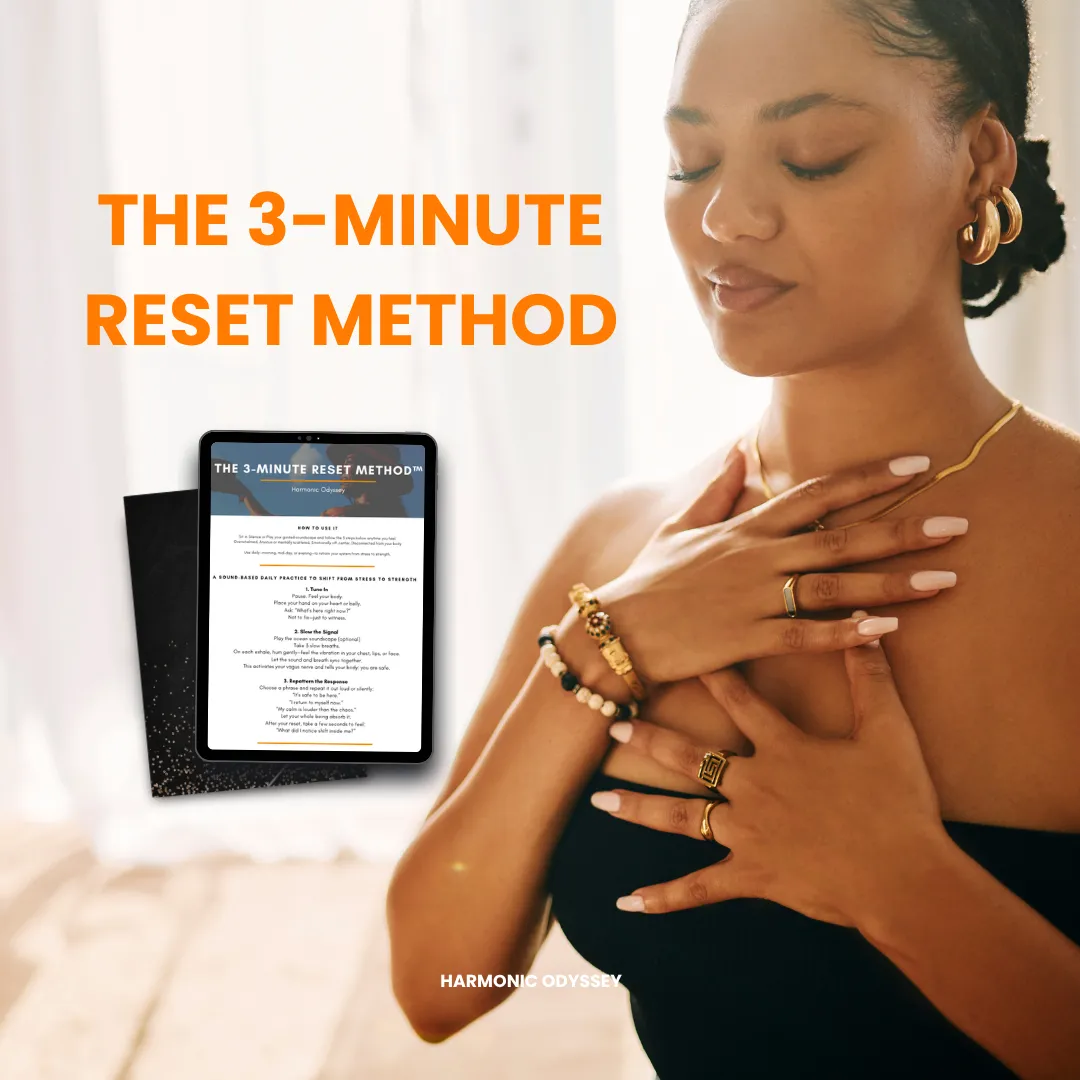
What you’ll receive:
A short, simple and powerful PDF guide
A simple practice you can return to anytime you feel overwhelmed
A simple, science-backed practice to help your body shift out of stress — without forcing calm or changing your mindset.
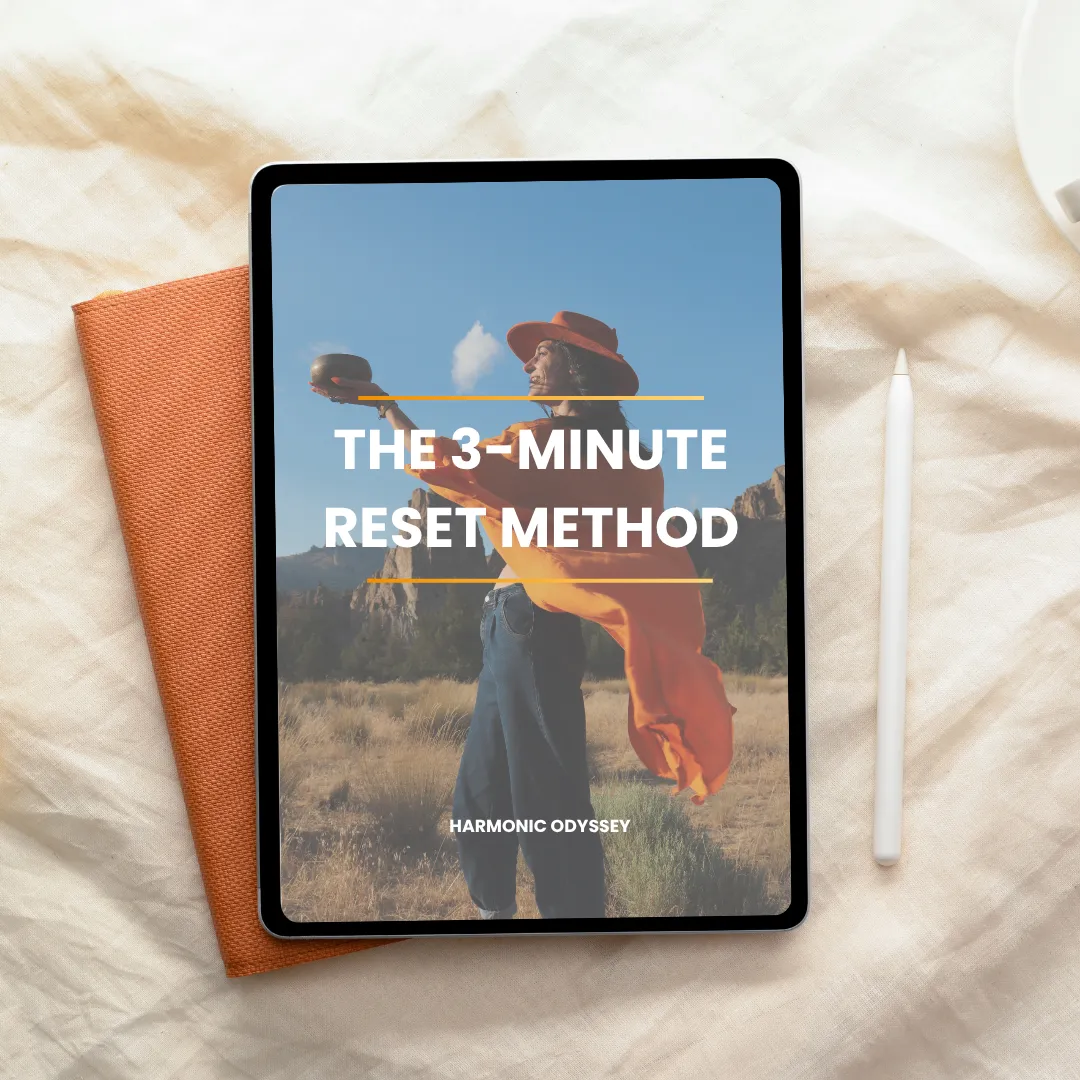
In just a few minutes, you may notice:
- Less internal noise
- A subtle sense of grounding
- More space between your thoughts
- A return to yourself — even briefly
This isn’t about fixing anything.
It’s about giving your nervous system the signal it needs to recalibrate.
Free • Instant access • Use anytime
Small shifts like this one are often enough to remember:
clarity doesn’t require effort — it requires the right signal.
Insight is a map. Experience is the journey.
If thinking could have fixed it, it would be fixed by now.
True clarity requires a shift in your internal architecture—a transition from "knowing" to being.
In this 30-minute Sound & Somatic Session, we stop talking about the stress and start clearing the path.
Using a sequence of meditation and frequency, we anchor you back into a state of safety that stays with you long after the sound fades.
If thinking could have fixed it, it would be fixed by now.
True clarity requires a shift in your internal architecture—a transition from "knowing" to being.
In this 30-minute Sound & Somatic Session, we stop talking about the stress and start clearing the path.
Using a sequence of meditation and frequency, we anchor you back into a state of safety that stays with you long after the sound fades.
Your Nervous System Is Ready
Stop fighting your biology. Understand it.
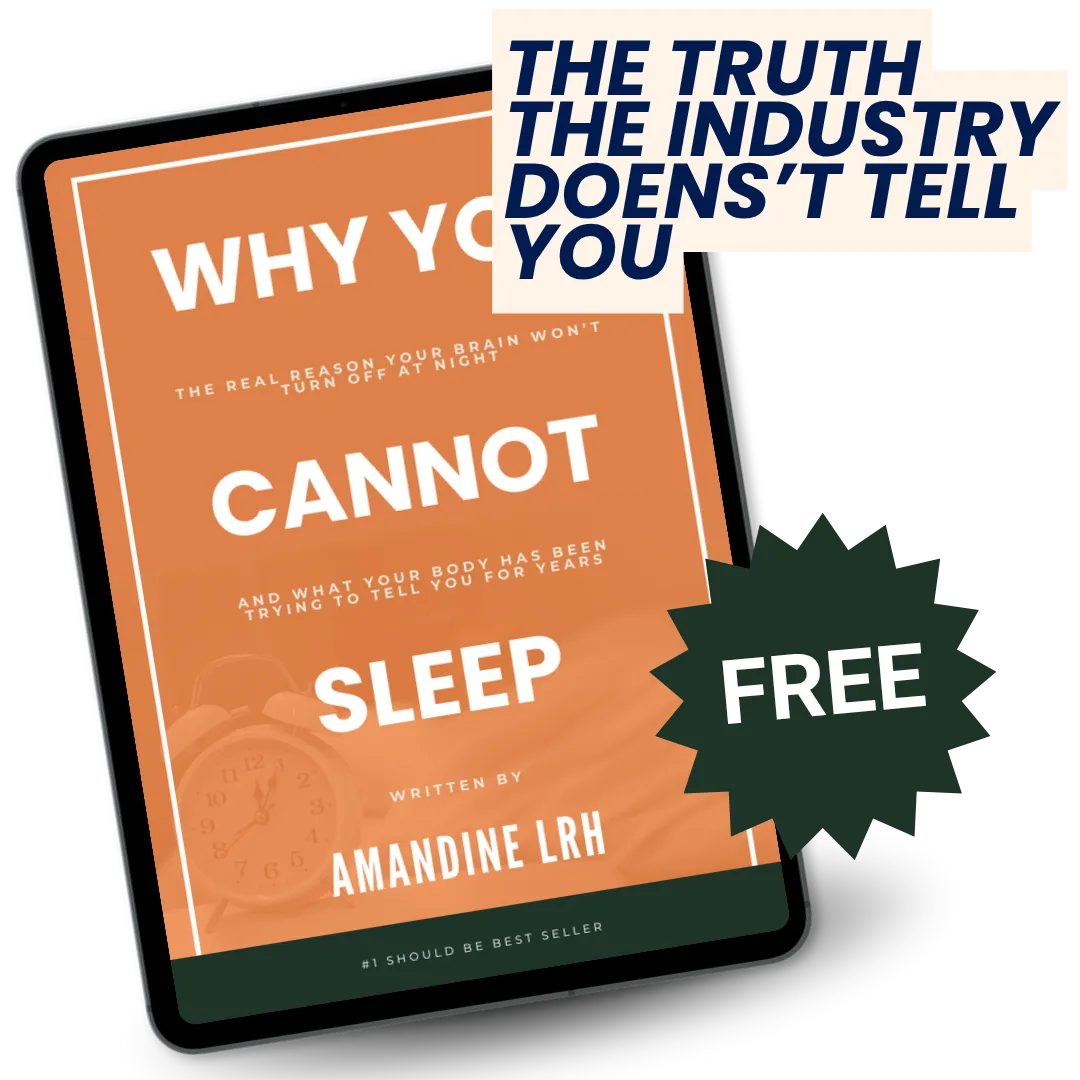
Join 17,000+ people who have shifted out of survival mode. Download the free foundational guide, Why You Cannot Sleep, and discover exactly how sound changes your internal architecture.
If thinking could have fixed it, it would be fixed by now.
True clarity requires a shift in your internal architecture—a transition from "knowing" to being.
In this 30-minute Sound & Somatic Session, we stop talking about the stress and start clearing the path.
Using a sequence of meditation and frequency, we anchor you back into a state of safety that stays with you long after the sound fades.
When the body settles, problems become solvable.
True Clarity Requires Both Strategy and Serenity.
Most approaches address only half of the equation.
Traditional coaching focuses on the mind, analyzing and strategizing.
Healing modalities focus on the body—releasing and relaxing.
My method integrates Sound Healing, Somatic Regulation, and Embodied Guidance into one cohesive journey.
We don't just calm your nervous system; we use that grounded state as the foundation for the life you're actually meant to live — whether that's setting boundaries, navigating a transition, or reclaiming your energy from burnout.
This work blends nervous system regulation, sound, and real-life transition.
My background is in branding and communication — helping people clarify their message and express what they offer with precision.
Over time, sound and intuitive healing became the way I support the moments when clarity isn’t accessible through thinking alone.
Working with the body first helps clarity and direction return naturally.

Grounded, science-informed practices — guided with care and precision.
— Amandine Le Roux Hancock, founder of Harmonic Odyssey

Featured In




The Roadmap to Your Next Chapter
A BIOLOGICAL APPROACH TO CLARITY
You don’t need more pressure to 'figure it out.'
You need a sequence that works with your biology, not against it. We move from safety to connection, and finally, to strategy

Reset
Quiet the internal noise.
We start by shifting your nervous system out of 'survival mode' and into safety. Using sound frequencies, we down-regulate the stress response so your body can stop fighting and start resting.
This step is about:
Goal: Signaling safety to the body.
Result: Replacing anxiety
with physiological calm.
Tool: The 3-Minute Clarity Reset.
A short, intentional practice to help your body shift out of stress and return to a baseline of calm and clarity.
(What the 3 Minutes Reset Method helps you achieve)

Understand
Hear your own signal again.
Once the static of stress settles, we bypass the analytical mind to access your intuition. This is where you remember who you are outside of your titles, obligations, and burnout.
This step is about:
Goal: Accessing the subconscious mind.
Result: Distinguishing fear from intuition.
Tool: Deep Sound Immersion & Guided Inquiry or the Harmonic Reset Workshop
Realign
Design your new chapter.
With a regulated system and clear intuition, strategy becomes easy. We map out your next steps—whether it's a career pivot, a business launch, or a lifestyle shift—from a place of certainty.
This step supports:
Goal: Turning clarity into action.
Result: Making life decisions without urgency or doubt.
Tool: Strategic Coaching & Integration. (application only)
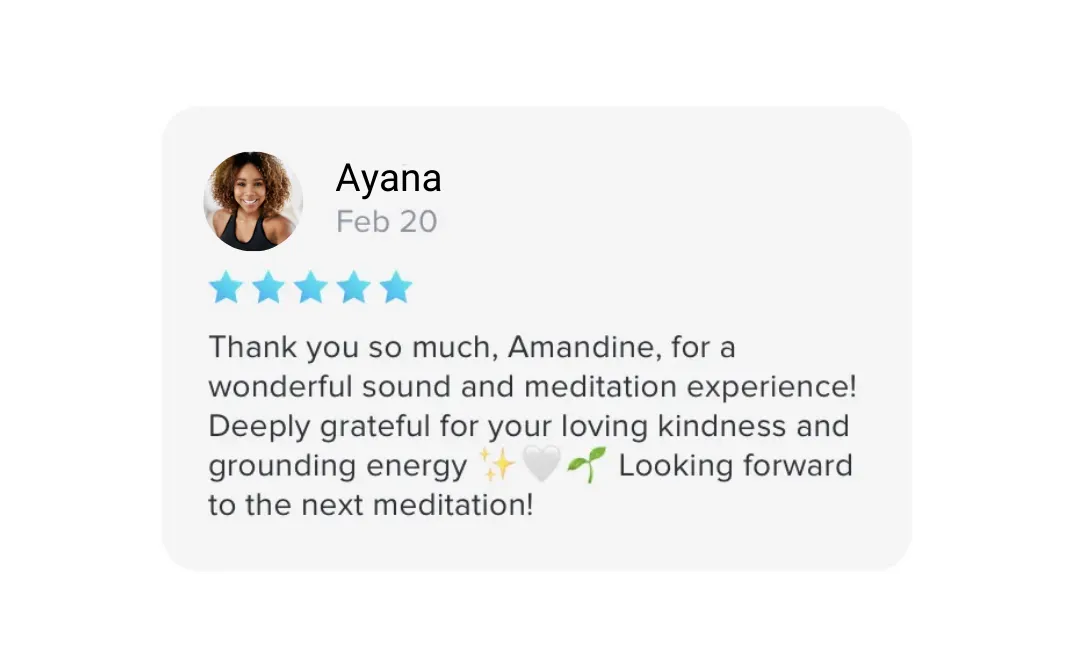
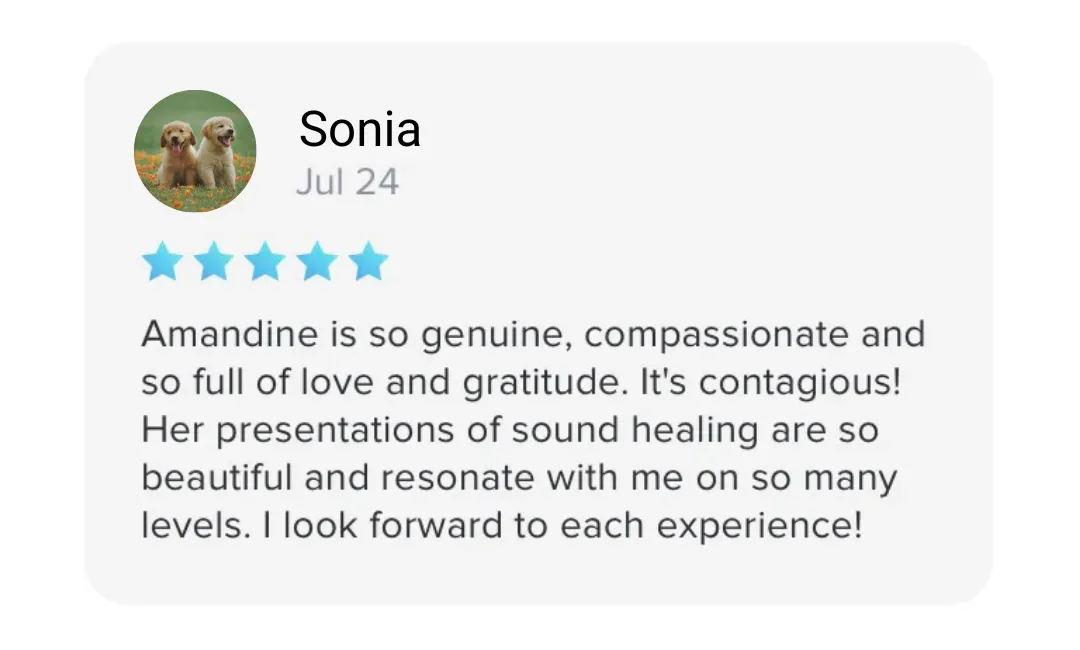
Join Over 17,000 People Who Have Found Their Reset.
My students come from all walks of life.
Read from their experience.






If you're navigating a deeper or longer transition — professional, personal, or internal — there are ways to work together beyond a single session. These paths are designed for those who want sustained support, clarity, and integration over time.
Questions You Might Be Asking
If you're wondering whether this is right for you, you're not alone. Here's what people ask before they start.
Yes. Most meditation apps ask you to quiet your mind through effort — focusing on breath, clearing thoughts, visualizing calm.
This works differently. Sound frequencies don't ask your mind to do anything. They bypass cognition entirely and speak directly to your nervous system, creating a physiological shift before your thinking brain even registers it.
You're not trying to relax. Your body is receiving a signal it recognizes as safety, and regulation happens as a biological response — not a mental achievement.
No. This work is grounded in nervous system science and acoustic physics, not dogma.
You don't need to believe in chakras, crystals, or energy fields for sound to work on your body. Specific frequencies influence brainwave states and vagal tone — that's measurable biology, not mysticism.
I do reference energy and resonance because they're useful frameworks, but if that language doesn't resonate with you, focus on this: your nervous system doesn't speak words. It speaks frequency. That's the foundation of everything here.
Calm music can be soothing, but it's not designed to regulate your nervous system at a biological level.
Precision sound work uses specific frequencies (432Hz, 528Hz, binaural beats) calibrated to influence brainwave patterns, slow your heart rate, and activate your vagus nerve — the main pathway between your brain and your body's stress response.
It's the difference between background noise that feels nice and a targeted intervention that changes your physiology.
Because most approaches try to fix burnout, anxiety, or overwhelm at the level of the mind — through insight, reframing, willpower, or positive thinking.
But if your nervous system is locked in survival mode, your thinking brain is offline. You can't "mindset" your way out of a dysregulated body.
This work starts with the body first. Once your nervous system feels safe, clarity, motivation, and decision-making return naturally — not because you forced them, but because the biological conditions for them are finally present.
Yes. In fact, many people find this work because traditional approaches haven't addressed the nervous system component of these experiences.
Sound-based regulation is gentle, non-verbal, and doesn't require you to "sit still and clear your mind" — which can feel impossible when your system is activated.
That said, this is not a replacement for medical or therapeutic care. It's a complementary tool that works alongside whatever support you're already receiving. If you're working with a therapist or doctor, this can enhance that work by helping your body settle enough to actually process what you're learning.
The free Sound Reset Workshop gives you an experience of what regulation feels like and introduces you to the core method. You'll leave with a felt sense of what's possible when your nervous system shifts.
The 10-Minute Serenity Challenge ($49) gives you 21 days of short daily practices — ideal if you want something simple you can return to regularly without a big time commitment.
The Harmonic Reset Journey ($197) is a 10-day deep-dive that teaches your body how to exit survival mode and stay regulated. It's structured, cumulative, and designed to create lasting change — not just temporary relief.
The Regulated Shift ($997) is a 4-week live cohort where we don't just reset your nervous system — we rebuild your life from that regulated foundation. This is for people navigating major transitions who need sustained support and integration.
Two things: nervous system science and strategic integration.
Most sound healing is presented as relaxation or spiritual practice. That's valuable, but it often stays at the surface level — you feel calm in the moment, but the patterns return.
My work bridges sound healing and somatic regulation to create lasting nervous system shifts, then uses that regulated state as the foundation for strategic life decisions — whether that's a career pivot, boundary-setting, or building something new.
I come from 18 years in branding and strategic communication. I know how to help people clarify what they're building and express it with precision. Sound is the tool that makes that clarity accessible when thinking alone can't get you there.
No. The biological effects of sound frequencies happen whether you believe in the framework or not.
I sometimes reference chakras and energy centers because they're useful maps for understanding where the body holds tension and how sound affects different areas. But you can think of them as anatomical regions with specific nerve clusters if that makes more sense to you.
What matters is this: your nervous system responds to frequency. That's physics and biology. The rest is just language.
Field Notes from the Odyssey
The Neuroscience of Stress to Flow: How Your Brain Shifts in 3 Minutes
The Neuroscience of Stress to Flow: How Your Brain Shifts in 3 Minutes
Stress and flow might feel like opposite worlds. Stress leaves you wired, anxious, and stuck in your head. Flow feels like time disappears, ideas move through you effortlessly, and your body hums in harmony with what you’re doing.
Here’s the surprising part: neuroscience shows the difference between these two states isn’t years of meditation—it can happen in as little as three minutes.
In this article, you’ll discover:
The brain science behind stress and flow
What happens in your nervous system minute by minute
How my Harmonic Reset Method uses breath, sound, and presence to create rapid transformation
How you can experience this shift yourself
Stress vs. Flow: What’s Really Happening in the Brain
The Stressed Brain Pattern
When you’re stuck in chronic stress, your brain gets locked in what researchers call threat-detection mode:
Overactive Prefrontal Cortex → constant mental chatter and overthinking
Hijacked Amygdala → fear center always on high alert
Suppressed Default Mode Network → creativity and insight shut down
Elevated Cortisol → stress hormones keep you wired and tired
This explains why stress makes it so hard to focus, sleep, or feel creative. Your brain is literally scanning for problems instead of flowing with solutions.
The Flow State Brain
Flow, on the other hand, feels effortless, rewarding, and even blissful. But what’s happening in your brain is profound:
Default Mode Network quiets → chatter and rumination decrease
Focus Networks engage → attention becomes sharp yet relaxed
Dopamine + Norepinephrine release → natural chemistry of motivation and reward
Brainwaves synchronize → different regions harmonize into alpha/theta rhythms
Research in Frontiers in Psychology shows that these measurable brain changes underpin the experience of “being in the zone.”
Why Three Minutes Is Enough
Recent studies confirm that even short breathing practices—sometimes under five minutes—can reduce stress and increase emotional regulation.
A meta-analysis in Scientific Reports found that breathwork produced significant effects on stress, anxiety, and depression, often within the first session.
Here’s the minute-by-minute timeline of how your nervous system transforms:
0–30 Seconds: Intentional breath activates the vagus nerve, signaling safety.
30–90 Seconds: Heart rate variability improves; the body shifts from fight-or-flight into calm parasympathetic mode.
90–180 Seconds: Brainwaves begin to move into alpha and theta (associated with flow states), while cortisol decreases.
3+ Minutes: Coherence stabilizes—your brain has shifted from stress to flow.
The Harmonic Reset Method: Breath + Sound + Presence
Most breathwork only activates one pathway. The Harmonic Reset Method engages three simultaneously for a faster, deeper shift:
Breath – The Vagus Nerve Highway
Controlled breathing directly stimulates your vagus nerve, improving heart rate variability—the gold standard of nervous system health (Harvard Business Review) calls it one of the fastest stress reduction tools).Sound – Vibrational Brain Entrainment
Humming or toning adds vibration that entrains your brainwaves and boosts vagal tone. Research from the National Center for Voice & Speech shows vocal practices directly regulate the nervous system.Presence – Focused Attention Networks
Mindful awareness activates attention circuits while quieting rumination. PMC studies show this brain activation is a hallmark of flow.
Together, these three elements create a rapid neurological reset.
A 3-Minute Harmonic Reset Practice
Want to try it? Here’s a simplified version you can do right now:
Minutes 1–2: Harmonic Breathing
Sit comfortably, spine upright but relaxed
Inhale through your nose for 4 counts (belly expands)
Hold for 4 counts
Exhale for 6 counts with a gentle “ahh” sound
Repeat for two minutes
Minute 3: Add Sound
Continue breathing, but hum gently on each exhale
Notice vibrations in your chest, throat, and head
Let the sound be natural—no need to “sing” it right
Integration
Keep bringing your awareness back to the present moment
You don’t need to stop thoughts—just stop following them
What People Experience
💬 “My racing thoughts finally went quiet—it was the first calm I’d felt in months.” – Sarah K.
💬 “It felt like my whole nervous system exhaled at once.” – Michael R.
💬 “The tension in my shoulders melted. I didn’t realize how much I was holding.” – Jennifer L.
With consistent practice, people report:
Better sleep and faster sleep onset
Reduced anxiety and emotional reactivity
Enhanced creativity and problem-solving
More resilience to daily stress
Why It Lasts: Neuroplasticity in Action
Your brain rewires itself based on repeated practice—this is neuroplasticity.
Each time you practice the Harmonic Reset Method, you strengthen the circuits that support calm and flow while weakening those that reinforce stress. Over time, it’s like paving a new neural highway from stress → flow, making the shift easier and more natural.
Try It for Yourself
If you want to start today, download my Sound Reset Ritual —a free guided sound-based practice designed to calm your nervous system and restore balance.
And if you’re ready for deeper transformation, join the waitlist for my Harmonic Reset Workshop. In this live training, you’ll learn:
Advanced techniques for lasting neurological change
How to customize the method for your stress patterns
An 8-week protocol for permanent transformation
How to sustain flow even in difficult situations

👉 Join the Harmonic Reset Workshop Waitlist
Bottom Line
Your stressed brain has done its job—it’s kept you safe. But you weren’t designed to just survive. You were designed to thrive.
The science proves it. The method makes it possible.
And your transformation? It begins in just three minutes.
References & Further Reading

The Neuroscience of Stress to Flow: How Your Brain Shifts in 3 Minutes
The Neuroscience of Stress to Flow: How Your Brain Shifts in 3 Minutes
Stress and flow might feel like opposite worlds. Stress leaves you wired, anxious, and stuck in your head. Flow feels like time disappears, ideas move through you effortlessly, and your body hums in harmony with what you’re doing.
Here’s the surprising part: neuroscience shows the difference between these two states isn’t years of meditation—it can happen in as little as three minutes.
In this article, you’ll discover:
The brain science behind stress and flow
What happens in your nervous system minute by minute
How my Harmonic Reset Method uses breath, sound, and presence to create rapid transformation
How you can experience this shift yourself
Stress vs. Flow: What’s Really Happening in the Brain
The Stressed Brain Pattern
When you’re stuck in chronic stress, your brain gets locked in what researchers call threat-detection mode:
Overactive Prefrontal Cortex → constant mental chatter and overthinking
Hijacked Amygdala → fear center always on high alert
Suppressed Default Mode Network → creativity and insight shut down
Elevated Cortisol → stress hormones keep you wired and tired
This explains why stress makes it so hard to focus, sleep, or feel creative. Your brain is literally scanning for problems instead of flowing with solutions.
The Flow State Brain
Flow, on the other hand, feels effortless, rewarding, and even blissful. But what’s happening in your brain is profound:
Default Mode Network quiets → chatter and rumination decrease
Focus Networks engage → attention becomes sharp yet relaxed
Dopamine + Norepinephrine release → natural chemistry of motivation and reward
Brainwaves synchronize → different regions harmonize into alpha/theta rhythms
Research in Frontiers in Psychology shows that these measurable brain changes underpin the experience of “being in the zone.”
Why Three Minutes Is Enough
Recent studies confirm that even short breathing practices—sometimes under five minutes—can reduce stress and increase emotional regulation.
A meta-analysis in Scientific Reports found that breathwork produced significant effects on stress, anxiety, and depression, often within the first session.
Here’s the minute-by-minute timeline of how your nervous system transforms:
0–30 Seconds: Intentional breath activates the vagus nerve, signaling safety.
30–90 Seconds: Heart rate variability improves; the body shifts from fight-or-flight into calm parasympathetic mode.
90–180 Seconds: Brainwaves begin to move into alpha and theta (associated with flow states), while cortisol decreases.
3+ Minutes: Coherence stabilizes—your brain has shifted from stress to flow.
The Harmonic Reset Method: Breath + Sound + Presence
Most breathwork only activates one pathway. The Harmonic Reset Method engages three simultaneously for a faster, deeper shift:
Breath – The Vagus Nerve Highway
Controlled breathing directly stimulates your vagus nerve, improving heart rate variability—the gold standard of nervous system health (Harvard Business Review) calls it one of the fastest stress reduction tools).Sound – Vibrational Brain Entrainment
Humming or toning adds vibration that entrains your brainwaves and boosts vagal tone. Research from the National Center for Voice & Speech shows vocal practices directly regulate the nervous system.Presence – Focused Attention Networks
Mindful awareness activates attention circuits while quieting rumination. PMC studies show this brain activation is a hallmark of flow.
Together, these three elements create a rapid neurological reset.
A 3-Minute Harmonic Reset Practice
Want to try it? Here’s a simplified version you can do right now:
Minutes 1–2: Harmonic Breathing
Sit comfortably, spine upright but relaxed
Inhale through your nose for 4 counts (belly expands)
Hold for 4 counts
Exhale for 6 counts with a gentle “ahh” sound
Repeat for two minutes
Minute 3: Add Sound
Continue breathing, but hum gently on each exhale
Notice vibrations in your chest, throat, and head
Let the sound be natural—no need to “sing” it right
Integration
Keep bringing your awareness back to the present moment
You don’t need to stop thoughts—just stop following them
What People Experience
💬 “My racing thoughts finally went quiet—it was the first calm I’d felt in months.” – Sarah K.
💬 “It felt like my whole nervous system exhaled at once.” – Michael R.
💬 “The tension in my shoulders melted. I didn’t realize how much I was holding.” – Jennifer L.
With consistent practice, people report:
Better sleep and faster sleep onset
Reduced anxiety and emotional reactivity
Enhanced creativity and problem-solving
More resilience to daily stress
Why It Lasts: Neuroplasticity in Action
Your brain rewires itself based on repeated practice—this is neuroplasticity.
Each time you practice the Harmonic Reset Method, you strengthen the circuits that support calm and flow while weakening those that reinforce stress. Over time, it’s like paving a new neural highway from stress → flow, making the shift easier and more natural.
Try It for Yourself
If you want to start today, download my Sound Reset Ritual —a free guided sound-based practice designed to calm your nervous system and restore balance.
And if you’re ready for deeper transformation, join the waitlist for my Harmonic Reset Workshop. In this live training, you’ll learn:
Advanced techniques for lasting neurological change
How to customize the method for your stress patterns
An 8-week protocol for permanent transformation
How to sustain flow even in difficult situations
👉 Join the Harmonic Reset Workshop Waitlist
Bottom Line
Your stressed brain has done its job—it’s kept you safe. But you weren’t designed to just survive. You were designed to thrive.
The science proves it. The method makes it possible.
And your transformation? It begins in just three minutes.
References & Further Reading
Field Notes from the Odyssey
The Neuroscience of Stress to Flow: How Your Brain Shifts in 3 Minutes
The Neuroscience of Stress to Flow: How Your Brain Shifts in 3 Minutes
Stress and flow might feel like opposite worlds. Stress leaves you wired, anxious, and stuck in your head. Flow feels like time disappears, ideas move through you effortlessly, and your body hums in harmony with what you’re doing.
Here’s the surprising part: neuroscience shows the difference between these two states isn’t years of meditation—it can happen in as little as three minutes.
In this article, you’ll discover:
The brain science behind stress and flow
What happens in your nervous system minute by minute
How my Harmonic Reset Method uses breath, sound, and presence to create rapid transformation
How you can experience this shift yourself
Stress vs. Flow: What’s Really Happening in the Brain
The Stressed Brain Pattern
When you’re stuck in chronic stress, your brain gets locked in what researchers call threat-detection mode:
Overactive Prefrontal Cortex → constant mental chatter and overthinking
Hijacked Amygdala → fear center always on high alert
Suppressed Default Mode Network → creativity and insight shut down
Elevated Cortisol → stress hormones keep you wired and tired
This explains why stress makes it so hard to focus, sleep, or feel creative. Your brain is literally scanning for problems instead of flowing with solutions.
The Flow State Brain
Flow, on the other hand, feels effortless, rewarding, and even blissful. But what’s happening in your brain is profound:
Default Mode Network quiets → chatter and rumination decrease
Focus Networks engage → attention becomes sharp yet relaxed
Dopamine + Norepinephrine release → natural chemistry of motivation and reward
Brainwaves synchronize → different regions harmonize into alpha/theta rhythms
Research in Frontiers in Psychology shows that these measurable brain changes underpin the experience of “being in the zone.”
Why Three Minutes Is Enough
Recent studies confirm that even short breathing practices—sometimes under five minutes—can reduce stress and increase emotional regulation.
A meta-analysis in Scientific Reports found that breathwork produced significant effects on stress, anxiety, and depression, often within the first session.
Here’s the minute-by-minute timeline of how your nervous system transforms:
0–30 Seconds: Intentional breath activates the vagus nerve, signaling safety.
30–90 Seconds: Heart rate variability improves; the body shifts from fight-or-flight into calm parasympathetic mode.
90–180 Seconds: Brainwaves begin to move into alpha and theta (associated with flow states), while cortisol decreases.
3+ Minutes: Coherence stabilizes—your brain has shifted from stress to flow.
The Harmonic Reset Method: Breath + Sound + Presence
Most breathwork only activates one pathway. The Harmonic Reset Method engages three simultaneously for a faster, deeper shift:
Breath – The Vagus Nerve Highway
Controlled breathing directly stimulates your vagus nerve, improving heart rate variability—the gold standard of nervous system health (Harvard Business Review) calls it one of the fastest stress reduction tools).Sound – Vibrational Brain Entrainment
Humming or toning adds vibration that entrains your brainwaves and boosts vagal tone. Research from the National Center for Voice & Speech shows vocal practices directly regulate the nervous system.Presence – Focused Attention Networks
Mindful awareness activates attention circuits while quieting rumination. PMC studies show this brain activation is a hallmark of flow.
Together, these three elements create a rapid neurological reset.
A 3-Minute Harmonic Reset Practice
Want to try it? Here’s a simplified version you can do right now:
Minutes 1–2: Harmonic Breathing
Sit comfortably, spine upright but relaxed
Inhale through your nose for 4 counts (belly expands)
Hold for 4 counts
Exhale for 6 counts with a gentle “ahh” sound
Repeat for two minutes
Minute 3: Add Sound
Continue breathing, but hum gently on each exhale
Notice vibrations in your chest, throat, and head
Let the sound be natural—no need to “sing” it right
Integration
Keep bringing your awareness back to the present moment
You don’t need to stop thoughts—just stop following them
What People Experience
💬 “My racing thoughts finally went quiet—it was the first calm I’d felt in months.” – Sarah K.
💬 “It felt like my whole nervous system exhaled at once.” – Michael R.
💬 “The tension in my shoulders melted. I didn’t realize how much I was holding.” – Jennifer L.
With consistent practice, people report:
Better sleep and faster sleep onset
Reduced anxiety and emotional reactivity
Enhanced creativity and problem-solving
More resilience to daily stress
Why It Lasts: Neuroplasticity in Action
Your brain rewires itself based on repeated practice—this is neuroplasticity.
Each time you practice the Harmonic Reset Method, you strengthen the circuits that support calm and flow while weakening those that reinforce stress. Over time, it’s like paving a new neural highway from stress → flow, making the shift easier and more natural.
Try It for Yourself
If you want to start today, download my Sound Reset Ritual —a free guided sound-based practice designed to calm your nervous system and restore balance.
And if you’re ready for deeper transformation, join the waitlist for my Harmonic Reset Workshop. In this live training, you’ll learn:
Advanced techniques for lasting neurological change
How to customize the method for your stress patterns
An 8-week protocol for permanent transformation
How to sustain flow even in difficult situations
👉 Join the Harmonic Reset Workshop Waitlist
Bottom Line
Your stressed brain has done its job—it’s kept you safe. But you weren’t designed to just survive. You were designed to thrive.
The science proves it. The method makes it possible.
And your transformation? It begins in just three minutes.
References & Further Reading
The Neuroscience of Stress to Flow: How Your Brain Shifts in 3 Minutes
The Neuroscience of Stress to Flow: How Your Brain Shifts in 3 Minutes
Stress and flow might feel like opposite worlds. Stress leaves you wired, anxious, and stuck in your head. Flow feels like time disappears, ideas move through you effortlessly, and your body hums in harmony with what you’re doing.
Here’s the surprising part: neuroscience shows the difference between these two states isn’t years of meditation—it can happen in as little as three minutes.
In this article, you’ll discover:
The brain science behind stress and flow
What happens in your nervous system minute by minute
How my Harmonic Reset Method uses breath, sound, and presence to create rapid transformation
How you can experience this shift yourself
Stress vs. Flow: What’s Really Happening in the Brain
The Stressed Brain Pattern
When you’re stuck in chronic stress, your brain gets locked in what researchers call threat-detection mode:
Overactive Prefrontal Cortex → constant mental chatter and overthinking
Hijacked Amygdala → fear center always on high alert
Suppressed Default Mode Network → creativity and insight shut down
Elevated Cortisol → stress hormones keep you wired and tired
This explains why stress makes it so hard to focus, sleep, or feel creative. Your brain is literally scanning for problems instead of flowing with solutions.
The Flow State Brain
Flow, on the other hand, feels effortless, rewarding, and even blissful. But what’s happening in your brain is profound:
Default Mode Network quiets → chatter and rumination decrease
Focus Networks engage → attention becomes sharp yet relaxed
Dopamine + Norepinephrine release → natural chemistry of motivation and reward
Brainwaves synchronize → different regions harmonize into alpha/theta rhythms
Research in Frontiers in Psychology shows that these measurable brain changes underpin the experience of “being in the zone.”
Why Three Minutes Is Enough
Recent studies confirm that even short breathing practices—sometimes under five minutes—can reduce stress and increase emotional regulation.
A meta-analysis in Scientific Reports found that breathwork produced significant effects on stress, anxiety, and depression, often within the first session.
Here’s the minute-by-minute timeline of how your nervous system transforms:
0–30 Seconds: Intentional breath activates the vagus nerve, signaling safety.
30–90 Seconds: Heart rate variability improves; the body shifts from fight-or-flight into calm parasympathetic mode.
90–180 Seconds: Brainwaves begin to move into alpha and theta (associated with flow states), while cortisol decreases.
3+ Minutes: Coherence stabilizes—your brain has shifted from stress to flow.
The Harmonic Reset Method: Breath + Sound + Presence
Most breathwork only activates one pathway. The Harmonic Reset Method engages three simultaneously for a faster, deeper shift:
Breath – The Vagus Nerve Highway
Controlled breathing directly stimulates your vagus nerve, improving heart rate variability—the gold standard of nervous system health (Harvard Business Review) calls it one of the fastest stress reduction tools).Sound – Vibrational Brain Entrainment
Humming or toning adds vibration that entrains your brainwaves and boosts vagal tone. Research from the National Center for Voice & Speech shows vocal practices directly regulate the nervous system.Presence – Focused Attention Networks
Mindful awareness activates attention circuits while quieting rumination. PMC studies show this brain activation is a hallmark of flow.
Together, these three elements create a rapid neurological reset.
A 3-Minute Harmonic Reset Practice
Want to try it? Here’s a simplified version you can do right now:
Minutes 1–2: Harmonic Breathing
Sit comfortably, spine upright but relaxed
Inhale through your nose for 4 counts (belly expands)
Hold for 4 counts
Exhale for 6 counts with a gentle “ahh” sound
Repeat for two minutes
Minute 3: Add Sound
Continue breathing, but hum gently on each exhale
Notice vibrations in your chest, throat, and head
Let the sound be natural—no need to “sing” it right
Integration
Keep bringing your awareness back to the present moment
You don’t need to stop thoughts—just stop following them
What People Experience
💬 “My racing thoughts finally went quiet—it was the first calm I’d felt in months.” – Sarah K.
💬 “It felt like my whole nervous system exhaled at once.” – Michael R.
💬 “The tension in my shoulders melted. I didn’t realize how much I was holding.” – Jennifer L.
With consistent practice, people report:
Better sleep and faster sleep onset
Reduced anxiety and emotional reactivity
Enhanced creativity and problem-solving
More resilience to daily stress
Why It Lasts: Neuroplasticity in Action
Your brain rewires itself based on repeated practice—this is neuroplasticity.
Each time you practice the Harmonic Reset Method, you strengthen the circuits that support calm and flow while weakening those that reinforce stress. Over time, it’s like paving a new neural highway from stress → flow, making the shift easier and more natural.
Try It for Yourself
If you want to start today, download my Sound Reset Ritual —a free guided sound-based practice designed to calm your nervous system and restore balance.
And if you’re ready for deeper transformation, join the waitlist for my Harmonic Reset Workshop. In this live training, you’ll learn:
Advanced techniques for lasting neurological change
How to customize the method for your stress patterns
An 8-week protocol for permanent transformation
How to sustain flow even in difficult situations
👉 Join the Harmonic Reset Workshop Waitlist
Bottom Line
Your stressed brain has done its job—it’s kept you safe. But you weren’t designed to just survive. You were designed to thrive.
The science proves it. The method makes it possible.
And your transformation? It begins in just three minutes.
References & Further Reading
Your Nervous System Is Ready
You just need to take the first step...
and let your body show you what's possible.
Join 10,000+ people who've stopped fighting
their nervous system and started
listening through this harmonic odyssey instead.

10 Day Journey | Instant Access
Let's Stay Connected






© 2026 Harmonic Odyssey by Amandine LRH - A Greener Life LLC, All Rights Reserved.